ADHD Self-Test
ADHD Test for Adults
With this short test, adults receive an initial orientation on patterns associated with ADHD and on the most important neurodivergences connected with them.
The test is a first step toward better understanding your own symptoms and traits and recognizing both growth potential and challenges.
Table of Contents
ADHD Self-Test for Adults
Many people associate ADHD with hyperactive children who cannot sit still. But ADHD in adults often looks quite different. It is quieter, more hidden — and therefore frequently overlooked. Behind the restlessness, the distractibility, and the feeling of never quite being present, there is often a neurological disposition that shapes your entire experience.
This self-test is based on the Zensitively Neurodivergence Inventory (ZNI), a psychometric questionnaire whose quality criteria are published. In about 4–6 minutes, you describe how you perceive, focus and react. Your neuroprofile evaluates your answers on seven scales, including the Kinetic-Cognitive Learning Style scale, which is associated with ADHD.
Free ADHD Test — What You Can Expect
Our test is completely free and delivers immediate results. You receive a detailed evaluation of your answers with explanations of different areas of your experience, including patterns associated with ADHD. Important: the result is an orientation aid, not a diagnosis, and the ZNI contains no cut-off scores. The test can be repeated as often as you like.
Do I Have ADHD? — What Lies Behind the Question
"Do I have ADHD?" — anyone asking this question is looking for an answer about whether they have ADHD, yes. But behind it often lies the desire to finally understand why you feel different from others. Why you experience certain things the way you do.
That is the most important aspect of it. Because ADHD is not only what the name suggests. The medical classifications ICD-11 and DSM-5-TR list ADHD as a neurodevelopmental disorder. From the perspective of the neurodiversity movement, ADHD is not an "attention deficit" and not a disorder, but the expression of a sensitive nervous system that is desperately trying to cope in a social environment it was not built for — working against itself in the process. Not being a disorder does not mean not being a disability: ADHD can be a disability without being a disorder.
It is precisely this suffering that drives most people to search for an explanation. An explanation for why life feels so exhausting, even though from the outside everything seems to be working just fine.
Perhaps you recognise this: you have a high inner tempo that never truly settles. You jump from thought to thought, from project to project. Not because you lack focus — but because your nervous system is searching for something that captivates it. And when it finds that, you can immerse yourself for hours. This hyperfocus is not a contradiction to distractibility. It is the other side of the same disposition.
Perhaps you often feel flooded — by stimuli, by demands, by the sheer volume of things that all seem a little bit important. The Canadian physician Gabor Maté describes ADHD as a kind of "tuning out": a disconnection in response to overwhelm. In this view, the symptoms — forgetfulness, impulsivity, scattered thinking — are not the disposition itself, but the flight from what is happening inside us.
Perhaps you also know the emotional intensity. Boredom feels like hitting a wall. And when something does not captivate you, states emerge that look strikingly similar to depression — until suddenly something happens that pulls you out of the swamp and you are fully present again. This oscillation is typical of ADHD and is frequently misunderstood.
ADHD Symptoms in Adults
ADHD symptoms in adults can look quite different from the picture most people carry in their heads. Many still associate ADHD with hyperactivity — yet statistically, that is a more male-typical way for the symptoms to show. Plenty of people experience inner restlessness instead, for example. The diagnostic criteria describe inattention, hyperactivity and impulsivity. In our view, however, ADHD is better characterised by a nervous system under constant tension: a system so overwhelmed that it tries to flee from its own inner perception — to tune it out. From this perspective, the symptoms that follow are usually a side effect of that:
Attention that follows interest: The ADHD nervous system distributes attention not according to importance, but according to interest. Whatever captivates gets everything — whatever does not gets almost nothing, no matter how urgent it might be. From the outside, this looks like unreliability. From the inside, it feels like an engine that only starts on certain roads.
Hyperfocus: The same disposition that makes staying with something boring almost impossible also allows for hours of complete immersion in whatever does captivate the nervous system. Research now describes hyperfocus as a phenomenon in its own right — yet it still does not appear in the diagnostic criteria, because those only count what is missing.
Inner restlessness: Many adults with ADHD can sit still on the outside — the price is an inner world that never comes to rest. Thoughts that jump, a body that is wired, the feeling of always being "on". This internalised form of hyperactivity is regularly overlooked in assessments because it is invisible from the outside.
Emotional intensity: With ADHD, feelings arrive faster, stronger, and more physically. Researchers like Russell Barkley have argued for years that this difficulty regulating emotions belongs at the core of ADHD — yet it is still absent from the official criteria. For many people, it is more burdensome than any problem with concentration.
RSD — Rejection Sensitive Dysphoria: Perhaps the most underestimated companion of ADHD: an extreme sensitivity to rejection and criticism that can feel physical, like a blow. Even the smallest rebuffs — a curt tone, an unanswered message — can echo for hours or days. The ZNI captures this sensitivity with the Emotional Overwhelm scale, which is associated with RSD, because it often shapes everyday life more strongly than can be seen from the outside.
Executive function in everyday life: Starting, staying with it, remembering, sorting — the invisible administrative work of life costs an ADHD nervous system many times the energy. Not because the knowledge of how to do it is missing, but because the starting mechanism works differently. The gap between wanting to and actually beginning is a well-documented and yet little-understood ADHD pattern.
Whether these patterns show, and how strongly, depends on context — on work, relationships, sleep, stress. That is precisely why our test does not only ask about these patterns, but sets your answers in relation to the other scales of the ZNI.
ADD or ADHD — What Is the Difference?
If you have searched for an ADD test, you have encountered a distinction that strictly speaking no longer exists. ADD — Attention Deficit Disorder without hyperactivity — was long considered a separate category. People with ADD were seen as the "quiet", daydreaming variants: less impulsive, less conspicuous, but internally just as overwhelmed.
The reality is: ADHD is a spectrum. There is not a hyperactive and a quiet variant as two separate things. There is a nervous system that functions in a particular way — and that manifests differently in every person. Some people are outwardly restless, others inwardly. Some are impulsive in actions, others in thoughts.
Diagnostic frameworks have since dissolved this distinction. What was once called ADD now falls under the ADHD spectrum. Our test reflects this diversity without sorting people into rigid categories.
ADHD in Women
A common misdiagnosis for women with ADHD is depression. This is because ADHD in women often looks different from the image most people have in mind. Less outward hyperactivity, more inner restlessness. Less impulsivity in actions, more emotional flooding.
Women with ADHD have often learned to compensate for their difficulties — through perfectionism, through over-adaptation, through the feeling of needing to try even harder. The result: they function on the outside, but the cost is high. Chronic exhaustion, the feeling of never being good enough, and a deep uncertainty about who you actually are when you stop compensating.
We have designed our test so that it asks about these less visible patterns just as it asks about the obvious ones. It does not ask about stereotypes, but about your experience. That is why we do not need to ask whether you are male or female in the test.
How This Test Compares to the ASRS v1.1 (WHO)
Anyone searching online for an ADHD test often lands on the same instrument: the ASRS v1.1. This scale was developed in 2005 by Ronald Kessler and colleagues for the World Health Organization — 18 questions that mirror the diagnostic criteria, plus a short version with six questions. Many online ADHD self-tests are based on exactly those six questions.
Kessler and colleagues describe the ASRS as a short screening scale for use in the general population. A screening is a first filter: it shows whether a closer assessment might be worthwhile. How well that works depends on who fills in the questionnaire. Dunlop and colleagues (2018) examined the ASRS-v1.1 in 40 adults with depression: sensitivity was 60 percent, specificity 68.6 percent, and only about one in five positive results (21.4 percent) belonged to a person with an ADHD diagnosis. A negative result, by contrast, spoke clearly against ADHD (negative predictive value 92.3 percent). The authors conclude that after a positive result, it should be checked carefully whether the reported symptoms stem from the depression. If you have read the section on women, you will already sense why this matters to us — depression is a common misdiagnosis in women with ADHD.
There is also a limit in what it asks about. The ASRS questions follow the diagnostic criteria and ask about difficulties: How often do you have difficulty? How often do you make careless mistakes? How often do you put things off? These criteria were developed largely on children, above all on boys, and they do not include what researchers like Russell Barkley describe as a core component of ADHD: emotional intensity. Hyperfocus and RSD (rejection sensitivity) do not appear in the ASRS either. For a screening, that is consistent. It says little about the experience behind the answers.
That is why the ZNI answers a different question. It is not a screening for ADHD; on seven scales, it describes how you perceive, focus and react, including areas the ASRS does not ask about: Emotional Overwhelm (associated with RSD), High Sensitivity and Alexithymia. Neither instrument makes a diagnosis. But the ZNI draws a picture instead of a score against a cut-off — and a picture is something you can read, understand, and think further with.
How well the inventory measures is published: the Kinetic-Cognitive Learning Style scale of the Zensitively Neurodivergence Inventory (ZNI), which is associated with ADHD, was tested against the Conners' Adult ADHD Rating Scales (CAARS) and reaches 95 percent of the agreement attainable over the same interval. Its internal consistency is α = .81, its stability over 14 to 90 days r = .73. All figures, samples and limitations are set out in the technical documentation of the ZNI, version 1.0.
ADHD Diagnosis in Adults
In many places, anyone seeking an ADHD diagnosis should be prepared for waiting times — often several months, sometimes over a year. In addition, many diagnostic procedures were originally developed for children and adolescents. Adults who have spent decades building compensatory strategies can easily fall through the cracks.
Our test does not replace a diagnosis; it answers a different question. But it can be an important first step: putting your own experience into words and seeing that there are terms for it that many people share with you. For many, that alone brings relief, whether or not they are seeking a diagnosis.
What matters when choosing a diagnostic provider: the practitioners should be familiar with the neurodiversity paradigm and not look solely for deficits. In our view, good diagnostic support treats ADHD not only as a disorder to be fixed, but also as a disposition to be understood.
What Sets This ADHD Test Apart from Others
A pure ADHD test asks about ADHD symptoms and finds ADHD symptoms. That sounds logical, but falls short for three reasons:
First, many patterns that are frequently associated with ADHD in media portrayals overlap with autistic traits or high sensitivity. If you only look in one direction, you miss the bigger picture.
Second, there are many "neighbouring" neurodivergences to ADHD that have a significant impact on who we are and how we feel. One example is RSD (Rejection Sensitive Dysphoria). Many people with ADHD describe RSD: even the smallest criticism is then felt physically as an attack or rejection. In our work, we often see RSD shape everyday life more strongly than the attention patterns themselves — and that is why it is so important to look for it as well. Alongside Kinetic-Cognitive Learning Style, the ZNI therefore captures six further scales, including Emotional Overwhelm, which is associated with RSD.
Third, many ADHD tests ask mainly about difficulties, because they follow the diagnostic criteria. Our test comes from the paradigm of neurodiversity: the view that neurological diversity means we experience things differently — not that we have disorders. The medical classifications see this differently and describe ADHD as a disorder. This perspective runs through the test and through the neuroprofile we create.
Our test does not make a diagnosis and is not medical. Instead, it describes your neuroprofile — how you yourself experience the way you perceive, focus and react. Not just in terms of attention, but on several levels: perception, emotionality, social experience, sensory processing. In our experience, people can do more with such a holistic picture than with an isolated test result.
A test that only looks for ADHD deficits mostly finds deficits. What is easily overlooked is the nervous system behind them: one that perceives more intensely, feels more intensely, and reacts more intensely. Anyone who understands this pattern holds more in their hands than a test result: a starting point for shaping their own life to fit them better.
Sources
- Zensitively (2026). Zensitively Neurodivergence Inventory (ZNI): Technical documentation, version 1.0. Zensitively GmbH, Hamburg. zensitively.com/en/neurodivergence-inventory
- Kessler, R. C., Adler, L., Ames, M., Demler, O., Faraone, S., Hiripi, E., Howes, M. J., Jin, R., Secnik, K., Spencer, T., Ustun, T. B., & Walters, E. E. (2005). The World Health Organization Adult ADHD Self-Report Scale (ASRS): a short screening scale for use in the general population. Psychological Medicine, 35(2), 245–256.
- Dunlop, B. W., Wu, R., & Helms, K. (2018). Performance of the Adult ADHD Self-Report Scale-v1.1 in adults with major depressive disorder. Behavioral Sciences, 8(4), 37. https://doi.org/10.3390/bs8040037
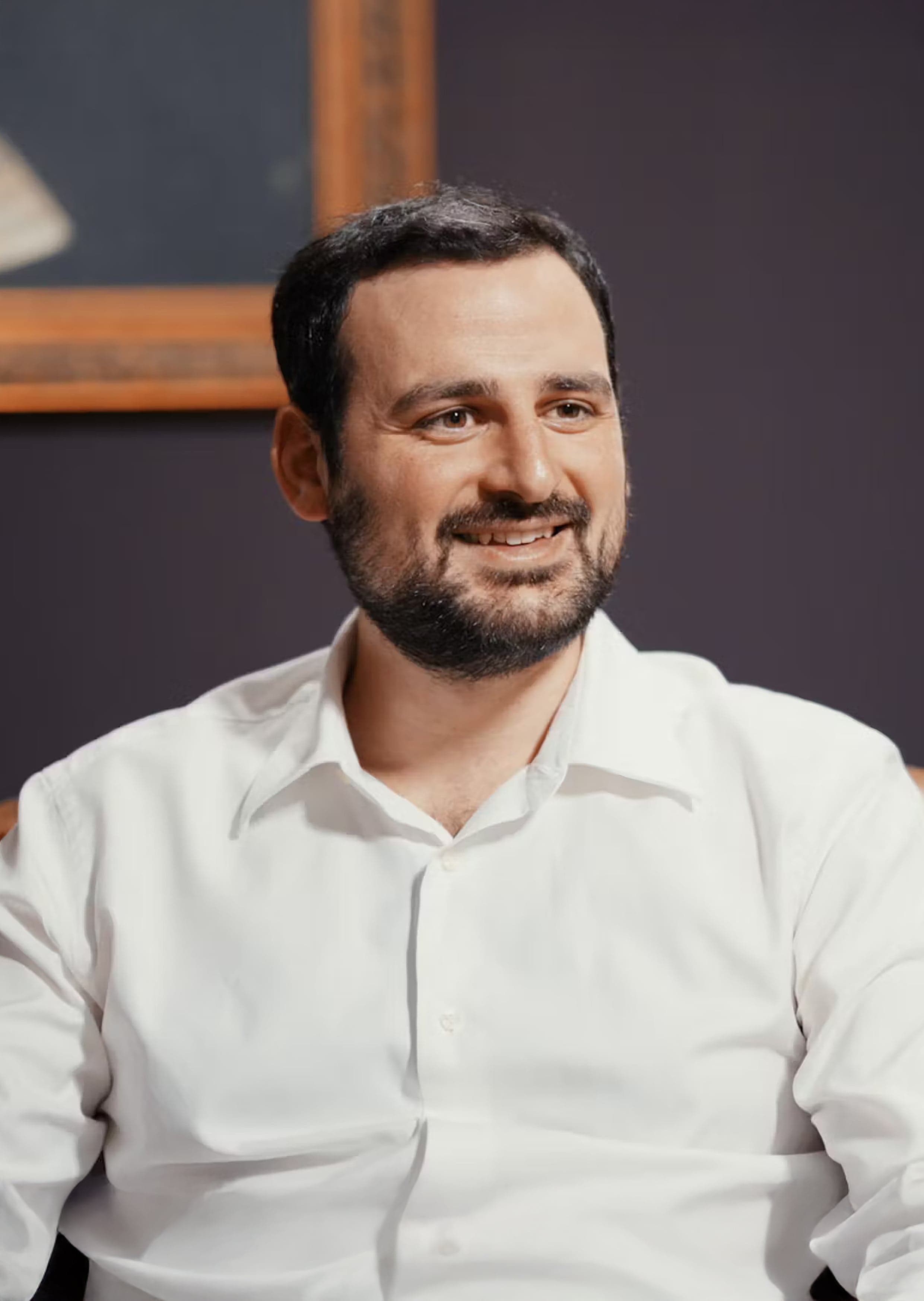
is a clinical psychologist and founder of Zensitively. He specialises in neurodiversity – particularly ADHD, autism, and high sensitivity – and developed this test based on validated psychological instruments. As a neurodivergent person himself, he combines clinical expertise with an inside-out perspective. More about the author
Frequently Asked Questions
Whether an ADHD diagnosis applies is established by specialist doctors or psychotherapists experienced in diagnosing ADHD. That involves a detailed conversation about today's difficulties and about childhood, because some features must already have appeared before the age of twelve, where possible accounts from relatives, and standardized questionnaires (DSM-5-TR; German S3 guideline on ADHD, AWMF 2018). An online self-test does not make a diagnosis.
A diagnosis has a clear function: it opens access to medication, to therapy covered by health insurance, to reasonable adjustments in training, higher education and work, and to the recognition of a disability. To do that it has to classify: the criteria ask whether enough features of a category apply; picturing an individual neuroprofile is not their job. From the point of view of the neurodiversity movement, a person's own experience falls short in that process. For many people a diagnosis is still an important step, because it gives their experience a name that schools, employers and authorities recognize.
The Zensitively Neurodivergence Inventory (ZNI) answers a different question. It follows the neurodiversity paradigm, according to which neurodivergent people are strained above all by their environment. That includes discrimination through neuronormativity, a lack of access to resources that suit one's own nervous system, and a lack of reasonable adjustments. The 60 statements show in which areas strain arises and how much you say you pay for the fact that your nervous system works differently in a neuronormative environment.
The ZNI scale associated with ADHD has been examined psychometrically. Kinetic-Cognitive Learning Style reaches an internal consistency of .81 and a stability over two to thirteen weeks of .73; with the Conners' Adult ADHD Rating Scales (CAARS) it agrees at r = .69 (ZNI technical documentation, Tables 2, 3 and 6). The ZNI is made for people who want to understand themselves and shape their everyday life to fit better, with a diagnosis, with a self-diagnosis or without one. It does not make a diagnosis, and it does not replace a clinical evaluation.
DSM-5-TR and ICD-11 distinguish three presentations: predominantly inattentive, predominantly hyperactive-impulsive and combined. The predominantly inattentive presentation is often called ADD in everyday speech. The presentation can change over the course of a life; in adults, hyperactivity often shows up as inner restlessness instead.
According to the S3 guideline, the core symptoms of ADHD are rather extreme expressions of features that are continuously distributed in the population (German S3 guideline on ADHD, AWMF 2018). The diagnostic systems still draw lines, because treatment needs a clear decision. From the point of view of the neurodiversity movement, ADHD is not a disorder but a way of organizing attention and drive; ICD-11 and DSM-5-TR continue to list ADHD as a disorder. Not a disorder does not mean not a disability: ADHD can be a disability without being a disorder.
The ZNI does not sort people into types. It shows Kinetic-Cognitive Learning Style — engagement that depends on interest and stimulation, with difficulty getting started and an urge to move — as a value from 0 to 100 alongside six further scales. In the norm sample of 9,270 people it is most strongly related to Monotropism (r = .51) and Emotional Overwhelm (r = .49) (ZNI technical documentation, Table 5): patterns associated with ADHD often do not stand alone.
The ADHD test typically takes 4 to 6 minutes. It consists of short statements that you can answer intuitively — there are no right or wrong answers.
Immediately after completion, you receive your personal neuroprofile, in which your score on the scale associated with ADHD is analyzed together with the other scales.
Yes, the ADHD test is completely free. You only need an email address so that we can deliver your neuroprofile to you securely.
There are no hidden costs and no obligation. The test is funded by Zensitively itself.
No. The test does not make a diagnosis and answers a different question: how you perceive, focus and react, and what this costs you in everyday life. The ZNI contains no cut-off scores.
What the test offers is a well-founded self-assessment: your score on the scale associated with ADHD in the context of the other scales — for many people the starting point for a conversation with professionals.
Yes. Your answers are stored encrypted in accordance with the European General Data Protection Regulation (GDPR) and are never sold or passed on to third parties.
ADHD patterns overlap considerably with autism and high sensitivity. A test that asks only about ADHD patterns cannot show these overlaps.
Alongside Kinetic-Cognitive Learning Style, the scale associated with ADHD, our test also captures Emotional Overwhelm (associated with RSD), Camouflaging and Alexithymia — areas that shape everyday life for many people with ADHD, but that ADHD-only tests usually do not ask about.
This way you see your score on the scale associated with ADHD in the context of the other scales, rather than in isolation.
Many online ADHD self-tests are based on the ASRS v1.1. The Zensitively Neurodivergence Inventory (ZNI) is an inventory of its own, with 60 statements and seven scales; the Kinetic-Cognitive Learning Style scale, which is associated with ADHD, was tested against the Conners' Adult ADHD Rating Scales (CAARS) and reaches 95 percent of the agreement attainable over the same interval.
By September 2026, the ZNI had been completed 155,609 times; its internal consistencies were determined in a reference group of 9,270 German-language first completions in 2026. Criterion validity against clinical diagnoses has not been examined; the ZNI contains no cut-off scores. All figures, samples and limitations are set out in the technical documentation (version 1.0, September 2026).
ADD — Attention Deficit Disorder without hyperactivity — is an outdated term. Diagnostic categories have since dissolved this distinction. What was previously called ADD now falls under the ADHD spectrum as the predominantly inattentive type.
ADHD is a spectrum with various expressions. Some people are outwardly restless, others inwardly. Some are impulsive in actions, others in thoughts. Our test captures this diversity without sorting people into boxes.
Often late — many women only get their answer in adulthood, and not infrequently only after their own children receive an ADHD diagnosis and they recognize themselves in the questionnaires. On top of that, symptoms typically intensify during hormonal transition phases, such as after pregnancies or during menopause.
For a self-test, that means it should ask about inner experience, not only about visible behavior. Our statements ask how you yourself experience the way you perceive, focus and react — you can read more in the "ADHD in Women" section higher up on this page.
With people who sought out the ZNI on their own initiative, not with the general population; their composition by age and gender is not known.