Autism Self-Test
Autism Test for Adults
With this short test, adults receive an initial orientation on patterns associated with the autism spectrum, such as monotropism and camouflaging, and on related areas such as high sensitivity and ADHD.
The test is a first step toward better understanding your own experience and recognizing both growth potential and challenges.
Table of Contents
- Autism Self-Test for Adults
- Autism Symptoms in Adults
- Autism Test for Adults: Why So Many Find Out Late
- Autism Spectrum Test: Why One Dimension Isn't Enough
- Asperger's Test: What You Actually Need Today
- Autism in Women
- Am I Autistic? — Everyday Signs
- How This Test Compares to the RAADS-R and AQ
- Autism Diagnosis in Adults
- Autism Test for Children: What Parents Should Know
- What Sets This Autism Test Apart from Others
Autism Self-Test for Adults
Autism was long considered a rare disorder affecting only a few people. It was spoken of as an evil spirit that robbed parents of their children. Today, the neurodiversity movement, which includes many researchers and many autistic people themselves, no longer views autism as a disorder — but as a natural neurological predisposition that leads to a distinct way of thinking, feeling, and perceiving the world. The medical classifications ICD-11 and DSM-5-TR still list autism as a disorder, as autism spectrum disorder. Not being a disorder does not mean not being a disability: autism can be a disability without being a disorder.
According to an estimate by the World Health Organization, about one in 127 people worldwide was autistic in 2021. The concept of autism itself is undergoing significant change. It is therefore not surprising that many people do not really know what autism actually is. Behind the sense of being different and the desire for a clear answer, there are often remarkable life stories.
This self-test is based on the Zensitively Neurodivergence Inventory (ZNI), a psychometric questionnaire whose quality criteria are published. In about 4–6 minutes, you describe how you perceive, focus and react. Your neuroprofile evaluates your answers on seven scales, including Monotropism and Camouflaging, which are associated with autism. Camouflaging, in other words masking, is not captured as a scale of its own by the RAADS-R or the AQ.
Autism Symptoms in Adults
Autism symptoms in adults rarely look like the picture most people have in mind. The criteria that picture comes from were developed decades ago on children — predominantly on Western European boys, in situations that have little to do with an adult life. What becomes visible in adults is therefore almost always filtered through decades of adaptation. In women too, whose symptoms often express themselves differently, many symptoms are unfortunately overlooked for this reason.
Adults rarely describe their experience in the language of the diagnostic criteria. The most common descriptions we encounter daily in our work are these:
The exhaustion does not come from the work. It comes from the in-between — from navigating unspoken rules, from working out what was just meant, from maintaining a version of yourself that others can connect to. Many autistic adults like people very much. What costs energy is not the attention given, but the translation work.
Attention is not disordered, it is focused and bundled. What is described in monotropism theory shows itself in everyday life as something very concrete: you can disappear into a subject for hours and forget hunger, thirst and appointments — and at the same time it costs disproportionate effort to be pulled out of that state. Both are the same disposition.
Perception is uneven, not uniformly sensitive. Sounds, light, smells, fabrics against the body arrive more intensely. At the same time there are areas where astonishingly little arrives. From the outside this seems contradictory; according to monotropism theory it is consistent, because whatever receives attention is processed in great depth of detail and the rest is not.
Predictability is not an odd quirk. Routines, preparation, time to withdraw are the means by which a nervous system that already processes a great deal stays below the overload threshold. When they fall away, it becomes visible how much work they were doing before.
Feelings are there, even when they are sometimes hard to grasp. Many autistic adults find it difficult to name what they feel. This difficulty is sometimes called alexithymia (which the ZNI captures as a scale of its own). In our view this is not because something is missing, but because non-autistic (allistic) people tend to construct their reporting about feelings socially rather than genuinely sensing them. Autistic people stand out more because they cannot construct socially in the same way and, owing to higher sensitivity, suffer more from the underlying inability to access the emotion. In our view, that inability is also culturally shaped, since we pass on few resources for grasping and describing one's own feelings directly.
Masking costs more than it seems. What looks like normality from the outside is hard work for many autistic people. The bill for masking does not arrive immediately but with a delay. That is exactly what makes it so difficult. The consequences many people describe include chronic exhaustion, the feeling of no longer being able to find one's own self, and sometimes a collapse that appears from the outside to come out of nowhere. So far, the diagnostic criteria mention masking only in passing. The other problem with masking is that it happens unconsciously.
Autism Test for Adults: Why So Many Find Out Late
Many adults only learn in their 30s, 40s, or even later that they are autistic. This is not because autism develops in adulthood — the predisposition was always there. It is because the system overlooked them.
The diagnostic criteria for autism were developed over decades based on children, primarily boys. Adults — and women in particular — can easily fall through this framework. Those who have learned to adapt and hide their differences are easily overlooked in tests and diagnostic assessments.
Many autistic adults have spent years or decades maintaining a kind of performance. This is called masking or camouflaging. Outwardly, they appear unremarkable, function at work, and maintain relationships. But inwardly, much feels wrong. A pervasive sense of not belonging. Exhaustion that does not come from work, but from the constant act of pretending.
This is one of the reasons why a good autism test for adults must be conceived differently. It should also ask about masking — not just about the obvious characteristics observed in children.
Autism Spectrum Test: Why One Dimension Isn't Enough
For people who have not yet explored the history of the term in depth, autism can feel like a homogeneous category. It is easy to think that autistic people all function in a particular way. But that is not the case. Autism is a broad spectrum, and there are many different ways of being autistic.
Many of the tests available today capture only part of what autism is. Research shows time and again that certain things are being overlooked: cultural differences, for example, or differences between men and women.
In our view, the problem is this: psychotherapy and psychiatry attempt to turn autism into something coherent and consistent, in order to standardise and simplify diagnoses. But that is not what autism is. Autism is a multi-dimensional spectrum encompassing many different ways of thinking, feeling, learning, and acting.
The diagnostic criteria for autism describe almost exclusively deficits. They look for weaknesses — and find them, even where another way of looking might simply see a particular way of being. Because much of it is ultimately a matter of perspective.
That is why a good test should capture a broader spectrum of neurodiversity. It should look at what actually makes the person who they are; what qualities they have. How they function — or would function, in a healthy environment.
Our test does not make a diagnosis and is not medical. Instead, it describes — as well as possible — your neuroprofile: how you yourself experience the way you perceive, focus and react, on seven scales. In our experience, people can do more with such an overall picture than with a single score.
Many patterns can also overlap with ADHD, for instance; a test that asks in only one direction cannot show that. High sensitivity is another area. In our view, high sensitivity is an independent dimension of the autistic experience — and fundamental to the experience of many neurodivergent people; research has so far treated high sensitivity and autism as separate concepts. In many pure autism tests, it unfortunately receives little attention.
Asperger's Test: What You Actually Need Today
Anyone searching for an Asperger's test is usually looking for something specific: an assessment of autistic patterns without language delay and without intellectual impairment — what was long called "high-functioning". That search is entirely legitimate. It is only the term behind it that has moved on.
The so-called Asperger syndrome — shaped by Hans Asperger, a psychiatrist of the 1940s — was long treated as a diagnosis in its own right. The International Classification of Diseases (ICD-11) has dissolved this subdivision and recognised autism as a single spectrum. This means: there are not two "types" of autism, but a broad range of manifestations.
The term "high-functioning" is particularly problematic. It suggests that some autistic people do not need support because they appear to function outwardly. Yet this very functioning often comes at a high price — in the form of chronic exhaustion, masking, and a feeling of having lost one's true self. These signs may look as though the person needs no support, yet over time they can carry a heavy cost.
So what you need today is not a separate or special Asperger's test, but a test that maps a broad spectrum and also asks about masking. Our test captures camouflaging as a scale of its own — the part that often remains invisible from the outside.
Autism in Women
Many autistic people mask. This masking, also called camouflaging, is often deeply distressing and frequently accompanies the person throughout their entire life. Research shows that autistic women, on average, report more camouflaging than autistic men (Hull et al., 2020). This probably contributes to their being overlooked more often and diagnosed too rarely.
Young women and girls in particular are overlooked and often do not discover their autism until their 30s and 40s. The problem is this: the earlier you understand that you are wired differently, the easier life becomes.
That is why we have designed our test to ask about experience rather than stereotypes, and to capture camouflaging as a scale of its own. In this way, we want to take the experience of autistic women just as seriously as that of autistic men. The test does not ask about your gender.
Am I Autistic? — Everyday Signs
"Am I autistic?" — this is a question many people ask themselves, often after years of doubt. It is rarely about a clear checklist that you can tick off. It is more about patterns that run through your entire life.
Perhaps you recognise this: you feel quickly exhausted in social situations — not because you dislike people, but because it costs you energy to navigate the unspoken rules. Or you have interests that you can immerse yourself in so deeply that time ceases to exist.
Perhaps you react to certain stimuli — sounds, light, textures — more intensely than other people. At the same time, there are areas where you appear remarkably resilient. This mixture of high sensitivity and apparent impassivity is typical of the autistic experience and is described in research as monotropism: attention is not distributed evenly but concentrates intensely on certain areas while others recede into the background.
Perhaps you find it difficult to change routines, or you need significantly more retreat after a day among people than others do. Perhaps you have the feeling of never quite fitting into the world — despite every effort.
From the neurodiversity perspective, none of these are deficits; they are indications of how your nervous system works. And understanding that can change a great deal.
How This Test Compares to the RAADS-R and AQ
Anyone wanting to test for autistic traits online will mostly encounter two instruments: the RAADS-R and the AQ. The RAADS-R (Ritvo Autism Asperger Diagnostic Scale — Revised) was developed in 2011 by Riva Ariella Ritvo and colleagues — 80 questions, designed specifically for adults. The AQ (Autism-Spectrum Quotient) comes from Simon Baron-Cohen and his team in Cambridge, dating from 2001 — 50 questions. Many autism self-tests on the internet are built on one or the other.
In the original validation study (Ritvo et al., 2011), the RAADS-R reached very high values for sensitivity and specificity. An independent study came to a different result: Jones and colleagues (2021) analysed the RAADS-R results of 50 adults who had been referred to a specialist autism service of the UK's National Health Service (NHS). There, the RAADS-R score was not associated with the later diagnostic outcome: the median was 138 points for people who received a diagnosis and 154 for people who did not, a difference that was not statistically significant. Sensitivity was 100 percent, specificity 3.03 percent; almost all of the people who did not receive a diagnosis scored above the cut-off. The sample is small and consisted only of people who had already been referred for an autism assessment. But it shows that, in this setting, the cut-off barely distinguished between people with and without a later diagnosis.
With the AQ, we see a different limit: it contains no questions about masking. Someone who has learned to paper over their own particularities may answer some questions the way their rehearsed adaptation suggests, rather than the way they actually experience the situation. To capture masking separately, Hull and colleagues (2019) developed a dedicated instrument, the Camouflaging Autistic Traits Questionnaire (CAT-Q).
The ZNI draws two conclusions from this. First, it captures camouflaging as a scale of its own. Second, it places the scales associated with autism within an overall picture of seven scales, rather than holding a single score against a cut-off; it contains no cut-off scores. None of these instruments makes a diagnosis. But the ZNI is neurodiversity-affirming and shows you how you perceive, focus and react — rather than merely whether you fall above a line.
The quality criteria of the Zensitively Neurodivergence Inventory (ZNI) are published: against the Monotropism Questionnaire, the Monotropism scale reaches 90 percent, and against the CAT-Q, the Camouflaging scale reaches 95 percent of the agreement attainable over the same interval; the internal consistencies are α = .85 and .91, stability over 14 to 90 days r = .73 and .79. All figures, samples and limitations are set out in the technical documentation of the ZNI, version 1.0.
Autism Diagnosis in Adults
Anyone seeking an autism diagnosis should be aware that in many places diagnoses are still made according to the ICD-10, even though the World Health Organization's ICD-11 has been in effect internationally since 2022.
The ICD-10 still divides autism into categories — childhood autism, Asperger syndrome, atypical autism. This classification is now considered outdated. With the ICD-11, autism is finally recognised as a spectrum, but the deficit-based language remains. The new criteria, too, are based on a medical model that conceptualises autism as a disorder.
For adults, the situation is particularly difficult. Many established procedures were originally developed for assessing children, and in adulthood a person's childhood history can often only be reconstructed in fragments. The masking that many adults have practised over decades is hard to recognise in a clinical interview. And the symptoms that present in adulthood differ significantly from those in childhood.
What matters when choosing a diagnostic provider: the professionals should be familiar with the neurodiversity paradigm and apply modern scientific standards. Researchers such as Prof. Tony Attwood and Dr. Michelle Garnett suggest speaking of "exploration" rather than "diagnosis" — because the goal is not to identify a disorder, but to understand one's own neurological predisposition.
Perhaps the most important criterion: the person accompanying you should make you feel understood. Not as a case, but as a person.
Autism Test for Children: What Parents Should Know
Our test is designed for adults — its questions assume an adult life, with the daily reality of work, experience of relationships, and years of self-observation. It is therefore not suitable for children. If you have questions about your own child, the most reliable path leads through a child and adolescent psychiatry practice or a specialist developmental paediatrics service — places where the assessment has been designed for children and takes their developmental history into account.
Even so, there are two things we would like to leave you with. First: understanding early how your own child is wired is one of the most valuable gifts you can offer — not in order to have a label, but in order to shape their environment so that it works with the child's nervous system rather than against it.
And second: many parents who set out to understand autism for their child recognise something unexpected along the way — themselves. Neurodivergence often runs in families. If something on this page felt familiar as you read, our test is here for you: for your own neuroprofile.
What Sets This Autism Test Apart from Others
A final word on autism and neurodiversity: yes, this test also works as an autism test for adults: you will not receive a medical diagnosis, but a picture of how pronounced the patterns associated with autism are in you. However, it goes beyond that: it is an invitation to get to know your own nervous system more thoroughly — in a scientifically oriented, positive, and appreciative way.
A test that looks only for autistic deficits mostly finds deficits. What gets lost in the process is the nervous system behind them — one that perceives more deeply, can focus more intensely, and flourishes in the right environment. Whoever understands their own pattern holds more than a test result in their hands: a starting point for shaping their own life to fit them better.
Sources
- Zensitively (2026). Zensitively Neurodivergence Inventory (ZNI): Technical documentation, version 1.0. Zensitively GmbH, Hamburg. zensitively.com/en/neurodivergence-inventory
- Ritvo, R. A., Ritvo, E. R., Guthrie, D., Ritvo, M. J., Hufnagel, D. H., McMahon, W., Tonge, B., Mataix-Cols, D., Jassi, A., Attwood, T., & Eloff, J. (2011). The Ritvo Autism Asperger Diagnostic Scale-Revised (RAADS-R): a scale to assist the diagnosis of Autism Spectrum Disorder in adults. Journal of Autism and Developmental Disorders, 41(8), 1076–1089.
- Baron-Cohen, S., Wheelwright, S., Skinner, R., Martin, J., & Clubley, E. (2001). The Autism-Spectrum Quotient (AQ): evidence from Asperger syndrome/high-functioning autism, males and females, scientists and mathematicians. Journal of Autism and Developmental Disorders, 31(1), 5–17.
- Jones, S. L., Johnson, M., Alty, B., & Adamou, M. (2021). The effectiveness of RAADS-R as a screening tool for adult ASD populations. Autism Research and Treatment, 2021, 9974791. https://doi.org/10.1155/2021/9974791
- Hull, L., Mandy, W., Lai, M.-C., Baron-Cohen, S., Allison, C., Smith, P., & Petrides, K. V. (2019). Development and Validation of the Camouflaging Autistic Traits Questionnaire (CAT-Q). Journal of Autism and Developmental Disorders, 49(3), 819–833.
- Garau, V. et al. (2023). Development and Validation of a Novel Self-Report Measure of Monotropism in Autistic and Non-Autistic People: The Monotropism Questionnaire. OSF Preprints, https://doi.org/10.31219/osf.io/ft73y (pre-print, not yet peer-reviewed).
- Hull, L., Lai, M.-C., Baron-Cohen, S., Allison, C., Smith, P., Petrides, K. V., & Mandy, W. (2020). Gender differences in self-reported camouflaging in autistic and non-autistic adults. Autism, 24(2), 352–363. https://doi.org/10.1177/1362361319864804
- World Health Organization (2025). Autism [Fact sheet]. https://www.who.int/news-room/fact-sheets/detail/autism-spectrum-disorders
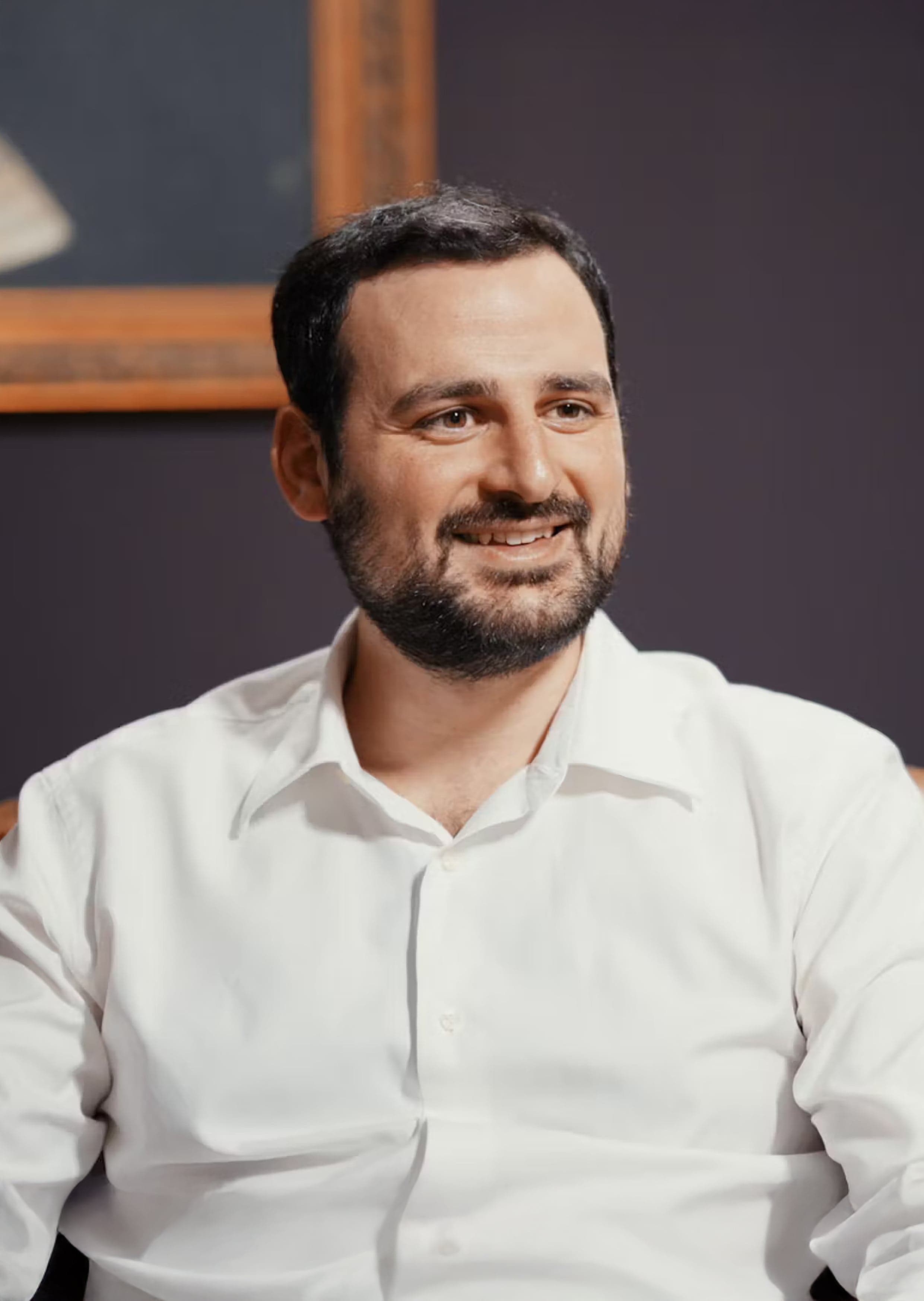
is a clinical psychologist and founder of Zensitively. He specialises in neurodiversity – particularly ADHD, autism, and high sensitivity – and developed this test based on validated psychological instruments. As a neurodivergent person himself, he combines clinical expertise with an inside-out perspective. More about the author
Frequently Asked Questions
Whether an autism diagnosis applies is established by specialist doctors or psychotherapists experienced in diagnosing autism. In Germany the basis is the S3 guideline on the diagnosis of autism spectrum disorders (AWMF 2016): a detailed conversation about one's own development since childhood, where possible accounts from relatives, observation and standardized procedures. An online self-test does not make a diagnosis.
A diagnosis has a clear function: it opens access to therapy covered by health insurance, to reasonable adjustments in training, higher education and work, and to the recognition of a disability. To do that it has to classify. The criteria describe autism as deficits and ask whether a category applies (DSM-5-TR); picturing an individual neuroprofile is not their job. From the point of view of the neurodiversity movement, a person's own experience falls short in that process. For many people a diagnosis is still an important step, because it gives their experience a name that schools, employers and authorities recognize.
The Zensitively Neurodivergence Inventory (ZNI) answers a different question. It follows the neurodiversity paradigm, according to which neurodivergent people are strained above all by their environment. That includes discrimination through neuronormativity (Botha & Frost 2020), a lack of access to resources that suit one's own nervous system, and a lack of reasonable adjustments. The 60 statements show in which areas strain arises and how much you say you pay for the fact that your nervous system works differently in a neuronormative environment.
The two ZNI scales associated with autism have been examined psychometrically. Monotropism and Camouflaging reach an internal consistency of .85 and .91 and a stability over two to thirteen weeks of .73 and .79. With the research questionnaires for both constructs, the Monotropism Questionnaire and the CAT-Q, they agree at r = .67 and r = .69 (ZNI technical documentation, Tables 2, 3 and 6). The ZNI is made for people who want to understand themselves and shape their everyday life to fit better, with a diagnosis, with a self-diagnosis or without one. It does not make a diagnosis, and it does not replace a clinical evaluation.
The division into three goes back to Lorna Wing and Judith Gould, who in 1979 described impairments in social interaction, communication and imagination (Wing & Gould 1979). ICD-11 and DSM-5-TR today group autism into two areas: persistent deficits in social communication and interaction, and restricted, repetitive patterns of behavior, interests or activities. DSM-5-TR counts an over- or under-sensitivity to stimuli among them as well.
The neurodiversity movement reads the same features as a way of being and perceiving, not as a disorder; ICD-11 and DSM-5-TR continue to list autism as a disorder. Not a disorder does not mean not a disability: autism can be a disability without being a disorder. The monotropism theory of Dinah Murray, Mike Lesser and Wenn Lawson describes autism as a way of distributing attention: deeply and continuously on few interests instead of broadly on many things at once (Murray, Lesser & Lawson 2005).
In the ZNI the two scales associated with autism are called Monotropism and Camouflaging (masking). In the norm sample of 9,270 people they are only moderately related (r = .39; ZNI technical documentation, Table 5): someone who concentrates deeply and continuously does not necessarily camouflage strongly, and the other way round. That is why the ZNI shows both scales separately.
“Mild autism” is not a diagnosis. Autistic features are distributed as a continuum across the whole population: many people show individual features to differing degrees without a diagnosis applying (Constantino & Todd 2003). The diagnostic systems still draw a line, because treatment, reasonable adjustments and support need a clear decision.
Autistic features also often do not stand alone. In the ZNI norm sample all seven scales share a strong common factor (hierarchical omega .82; ZNI technical documentation, Section 7.1): patterns associated with autism, ADHD, high sensitivity or alexithymia show up in the same answers. Diagnoses separate them, because care needs categories. The ZNI reads them as parts of one profile: of the way a person perceives and reacts.
Within the ZNI, too, a label would not hold: which of the seven scales is highest for a person is the same on a repeat after two weeks to three months in only 47 percent of cases (chance: 15 percent; ZNI technical documentation, Section 2.3). That is why the result shows all the scales side by side, as one person's profile.
In adults the DSM-5-TR diagnostic criteria often show up in everyday life like this: unspoken social rules and undertones stay hard to read, relationships follow patterns of their own, routines and predictability give a hold, interests are pursued deeply and persistently, and sounds, light or touch come across more strongly or more faintly than they do for others.
Many of these signs are barely visible from the outside when they are masked, that is, when a person hides their own reactions and copies the behavior of others. Autistic women report more camouflaging on average than autistic men; among non-autistic adults the same study found no difference (Hull et al. 2020). That may explain why autism is often recognized later in women.
The ZNI was therefore also developed with statements that ask about patterns described more often in women: about inner experience and about masking itself. Camouflaging is a scale of its own with 13 statements; it agrees at r = .69 with the CAT-Q, the research questionnaire on camouflaging (ZNI technical documentation, Table 6). The ZNI does not ask about gender. It was developed by Nazim Venutti, MSc Clinical Psychology, who has worked with neurodivergent adults since 2012, including women whose autism was recognized late.
The autism test typically takes 4 to 6 minutes. It consists of short statements that you can answer intuitively — there are no right or wrong answers.
Immediately after completion, you receive your personal neuroprofile, in which your scores on the scales associated with autism are analyzed together with the other scales.
Yes, the autism test is completely free. You only need an email address so that we can deliver your neuroprofile to you securely.
There are no hidden costs and no obligation. The test is funded by Zensitively itself.
No. The test does not make a diagnosis and answers a different question: how you perceive, focus and react, and what this costs you in everyday life. The ZNI contains no cut-off scores.
What the test offers is a well-founded self-assessment: your scores on the scales associated with autism in the context of the other scales — for many people the starting point for a conversation with professionals.
Yes. Your answers are stored encrypted in accordance with the European General Data Protection Regulation (GDPR) and are never sold or passed on to third parties.
Autistic traits overlap considerably with ADHD and high sensitivity. A test that asks only about autistic traits cannot show these overlaps — nor AuDHD, autism and ADHD together.
Alongside Monotropism, our test also captures Camouflaging, High Sensitivity and Alexithymia — areas that are central for many autistic people. The RAADS-R and the AQ do not capture camouflaging and alexithymia as scales of their own.
This way you see a complete picture instead of a single score measured against a cutoff.
The Zensitively Neurodivergence Inventory (ZNI) is an inventory of its own, with 60 statements and seven scales; the Monotropism and Camouflaging scales were tested against the Monotropism Questionnaire and the CAT-Q and reach 90 and 95 percent, respectively, of the agreement attainable over the same interval.
By September 2026, the ZNI had been completed 155,609 times; its internal consistencies were determined in a reference group of 9,270 German-language first completions in 2026. Criterion validity against clinical diagnoses has not been examined; the ZNI contains no cut-off scores. All figures, samples and limitations are set out in the technical documentation (version 1.0, September 2026).
If you already have an Asperger's diagnosis: it remains valid. Under the ICD-11 it is now understood as part of the autism spectrum — you do not need to be re-diagnosed, and no one takes that classification away from you.
For your own self-exploration, this means: don't look for a separate Asperger's test, but for a test that maps a broad spectrum and also takes masking into account. Our test captures camouflaging as a scale of its own.
Autistic women are often overlooked and too rarely diagnosed. Research shows that autistic women, on average, report more camouflaging than autistic men — they learn to hide their differences, which makes them easy to overlook in tests and diagnostic assessments.
Our test asks about experience rather than stereotypes and captures camouflaging as a scale of its own. It does not ask about gender.
With people who sought out the ZNI on their own initiative, not with the general population; their composition by age and gender is not known.