Free self-assessment for adults
Am I Neurodivergent? Autism, ADHD and HSP Test in One
With this short test, adults receive an initial assessment of different aspects of their neurodiversity, especially high sensitivity (HSP), ADHD, and autism.
The test is a first step toward better understanding your own neurotype and recognizing both growth potential and challenges.
Why This Test?
Many adults have felt for years that something does not quite match the usual expectations: heightened sensitivity in daily life, the feeling of focusing differently than others, intense emotions, recurring exhaustion.
This test gives you a language of orientation. It translates your experiences into comprehensible dimensions and shows where typical patterns of ADHD, autism, and high sensitivity overlap -- and where they diverge. The result does not replace a diagnosis, but it helps you make sense of your experiences and gain an initial understanding of the foundations of your own neurodivergence.
Table of Contents
- Autism Self-Test for Adults
- Autism Test for Adults
- Autism Spectrum Test
- Asperger's Test
- Autism in Women
- Am I autistic?
- RAADS-R and AQ
- Autism Diagnosis in Adults
- Autism Test for Children
- What Sets This Test Apart
- ADHD Self-Test for Adults
- Do I Have ADHD?
- ADHD Symptoms in Adults
- ADD or ADHD?
- Free ADHD Test
- ADHD in Women
- Compared to the ASRS
- ADHD Diagnosis in Adults
- What Sets This Test Apart
- High Sensitivity Self-Test for Adults
- Am I Highly Sensitive?
- High Sensitivity Symptoms and Characteristics
- Highly Sensitive or ADHD?
- High Sensitivity and Autism
- Highly Sensitive — What to Do?
- Why a Neurodiversity Test?
Autism Self-Test for Adults
Autism was long considered a rare disorder affecting only a few people. It was spoken of as an evil spirit that robbed parents of their children. Today, many leading researchers no longer view autism as a disorder — but as a natural neurological predisposition that leads to a unique way of thinking, feeling, and perceiving the world.
According to current research, approximately one in every hundred people is recognised as autistic. The concept of autism itself is undergoing significant change. It is therefore not surprising that many people do not really know what autism actually is. Behind the sense of being different and the desire for a clear answer, there are often remarkable life stories.
If you want to know whether your patterns point towards the autism spectrum, this self-test gives you a well-founded initial assessment in about 4–6 minutes — based on the current state of research in 2026 and drawing on comparisons with more than 120,000 other profiles. It also captures the quiet, masked forms of autism that conventional tests so often overlook.
Autism Test for Adults: Why so many discover late
Many adults only learn in their 30s, 40s, or even later that they are autistic. This is not because autism develops in adulthood — the predisposition was always there. It is because the system overlooked them.
The diagnostic criteria for autism were developed over decades based on children, primarily boys. Adults — and women in particular — fall through this framework. Those who have learned to adapt and hide their differences are simply not recognised by conventional tests.
Many autistic adults have spent years or decades maintaining a kind of performance. This is called masking or camouflaging. Outwardly, they appear unremarkable, function at work, and maintain relationships. But inwardly, much feels wrong. A pervasive sense of not belonging. Exhaustion that does not come from work, but from the constant act of pretending.
This is one of the reasons why a good autism test for adults must be conceived differently. It must make the masked aspects visible — not just the obvious characteristics observed in children.
Autism Spectrum Test: Why one dimension isn't enough
For people who have not yet explored the history of the term in depth, autism can feel like a homogeneous category. It is easy to think that autistic people all function in a particular way. But that is not the case. Autism is a broad spectrum, and there are many different ways of being autistic.
The tests available today are unfortunately often not particularly good at measuring what autism truly is. Time and again, we discover that certain things are being overlooked: cultural differences, for example, or differences between men and women.
The problem is this: psychotherapy and psychiatry attempt to turn autism into something coherent and consistent, in order to standardise and simplify diagnoses. But that is not what autism is. Autism is a multi-dimensional spectrum encompassing many different ways of thinking, feeling, learning, and acting.
The diagnostic criteria for autism are almost exclusively deficit-based. They look for — and find — weaknesses. Even where none exist. Because much of it is ultimately a matter of perspective.
That is why a good test must capture a broader spectrum of neurodiversity. It must look at what actually makes the person who they are; what qualities they have. How they function — or would function, in a healthy environment.
Our test does not provide a diagnosis and is not medical. Instead, it attempts — as well as possible — to map the neuroprofile. That is, the way the nervous system functions. It turns out that people find such a test far more useful.
Many patterns can also overlap with ADHD, for instance. An overly simplistic test therefore often leads to even more confusion. High sensitivity is another area. In reality, high sensitivity is an independent dimension of the autistic experience — and so fundamental to the experience of most neurodivergent people. Yet it receives far too little attention in many pure autism tests.
Asperger's Test: What you actually need today
Anyone searching for an Asperger's test is usually looking for something specific: an assessment of autistic patterns without language delay and without intellectual impairment — what was long called "high-functioning". That search is entirely legitimate. It is only the term behind it that has moved on.
The so-called Asperger syndrome — shaped by Hans Asperger, a psychiatrist of the 1940s — was long treated as a diagnosis in its own right. The International Classification of Diseases (ICD-11) has dissolved this subdivision and recognised autism as a single spectrum. This means: there are not two "types" of autism, but a broad range of manifestations.
The term "high-functioning" is particularly problematic. It suggests that some autistic people do not need support because they appear to function outwardly. Yet this very functioning often comes at a high price — in the form of chronic exhaustion, masking, and a feeling of having lost one's true self. These signs may look as though the person needs no support, yet over time they can carry a heavy cost — research has found associations, for example, between masking and suicidality.
So what you need today is not a separate or special Asperger's test, but a test that maps the whole broad spectrum — including the quiet, masked forms that once fell under "Asperger". That is exactly what our test is built for: it also captures the expressions that remain invisible from the outside.
Autism in Women
Many autistic people mask. This masking, also called camouflaging, is often deeply distressing and frequently accompanies the person throughout their entire life. Current research shows that women in particular often mask even more than men. As a result, they are disproportionately overlooked and consequently diagnosed far too rarely.
Young women and girls in particular are overlooked and often do not discover their autism until their 30s and 40s. The problem is this: the earlier you understand that you are wired differently, the easier life becomes.
That is why we have designed our test so that it respects and captures the aspects of autism and neurodivergence more typical for women just as much as those more typical for men. In this way, we honour the autistic female experience just as much as the male experience. This is also why we do not need to ask in the test whether you are male or female.
Am I autistic? — Everyday signs
"Am I autistic?" — this is a question many people ask themselves, often after years of doubt. It is rarely about a clear checklist that you can tick off. It is more about patterns that run through your entire life.
Perhaps you recognise this: you feel quickly exhausted in social situations — not because you dislike people, but because it costs you energy to navigate the unspoken rules. Or you have interests that you can immerse yourself in so deeply that time ceases to exist.
Perhaps you react to certain stimuli — sounds, light, textures — more intensely than other people. At the same time, there are areas where you appear remarkably resilient. This mixture of high sensitivity and apparent impassivity is typical of the autistic experience and is described in research as monotropism: attention is not distributed evenly but concentrates intensely on certain areas while others recede into the background.
Perhaps you find it difficult to change routines, or you need significantly more retreat after a day among people than others do. Perhaps you have the feeling of never quite fitting into the world — despite every effort.
None of these are deficits. They are indicators of how your nervous system works. And understanding that can change a great deal.
How this test compares to the RAADS-R and AQ
Anyone wanting to test for autistic traits online will mostly encounter two instruments: the RAADS-R and the AQ. The RAADS-R (Ritvo Autism Asperger Diagnostic Scale — Revised) was developed in 2011 by Riva Ariella Ritvo and colleagues — 80 questions, designed specifically for adults. The AQ (Autism-Spectrum Quotient) comes from Simon Baron-Cohen and his team in Cambridge, dating from 2001 — 50 questions. Most autism self-tests on the internet are built on one or the other. The AQ is also problematic because Baron-Cohen is highly controversial within the neurodiversity community; his views on autism are widely regarded as outdated and deficit-based.
In its original validation study, the RAADS-R looked impressive. But independent research could not replicate this — quite the opposite. A study by Jones and colleagues (2021), with adults waiting to be assessed for autism, found no relationship whatsoever between a person's RAADS-R score and the later diagnostic outcome. People who did not receive a diagnosis scored higher on average than those who did. And in psychiatric samples, its specificity fell to around 3 percent — meaning the scale labels almost everyone there as "probably autistic". For that reason, we cannot recommend the RAADS-R.
The AQ has a different problem, one that is central for us: it is blind to masking. Someone who has learned to paper over their own particularities — and autistic women in particular do this to a very high degree — answers many questions the way the rehearsed "neurotypical performance" dictates, not the way their nervous system actually works. Autistic women score lower on the AQ on average than autistic men, and so slip through the very net that was meant to catch them. Research has since developed a dedicated instrument to measure camouflaging on its own (the CAT-Q) — a quiet admission that the classic tests miss this dimension.
Our test draws two conclusions from this. First, we measure masking as a dimension in its own right, rather than ignoring it. Second, we embed autistic traits within a fuller picture of fourteen dimensions, rather than holding a single score against a cut-off. That makes our test no more of a diagnosis than the RAADS-R or the AQ. But it is neurodiversity-affirming, and it gives you a sense of how your nervous system works — not merely whether you fall above a line whose meaning has become questionable.
Autism Diagnosis in Adults
Anyone seeking an autism diagnosis should be aware that diagnostic practices in many places often correspond to the research standards of the 1970s and 1980s. In practice, diagnoses are still frequently made according to the ICD-10, even though the ICD-11 has been formally in effect since 2022.
The ICD-10 still divides autism into categories — childhood autism, Asperger syndrome, atypical autism. This classification is now considered outdated. With the ICD-11, autism is finally recognised as a spectrum, but the deficit-based language remains. The new criteria, too, are based on a medical model that conceptualises autism as a disorder.
For adults, the situation is particularly difficult. Many diagnostic centres use assessment procedures developed for children. The masking that adults have perfected over decades is rarely recognised. And the symptoms that present in adulthood differ significantly from those in childhood.
What matters when choosing a diagnostic provider: the professionals should be familiar with the neurodiversity paradigm and apply modern scientific standards. Leading researchers such as Prof. Tony Attwood and Dr. Michelle Garnett suggest speaking of "exploration" rather than "diagnosis" — because the goal is not to identify a disorder, but to understand one's own neurological predisposition.
Perhaps the most important criterion: the person accompanying you should make you feel understood. Not as a case, but as a person.
Autism Test for Children: What parents should know
Our test is designed for adults — its questions assume an adult life, with the daily reality of work, experience of relationships, and years of self-observation. It is therefore not suitable for children. If you have questions about your own child, the most reliable path leads through a child and adolescent psychiatry practice or a specialist developmental paediatrics service — places where the assessment has been designed for children and takes their developmental history into account.
Even so, there are two things we would like to leave you with. First: understanding early how your own child is wired is one of the most valuable gifts you can offer — not in order to have a label, but in order to shape their environment so that it works with the child's nervous system rather than against it.
And second: many parents who set out to understand autism for their child recognise something unexpected along the way — themselves. Neurodivergence often runs in families. If something on this page felt familiar as you read, our test is here for you: for your own neuroprofile.
What sets this autism test apart from others
A final word on autism and neurodiversity: yes, this test also works as an autism test for adults, from which you will not receive a medical diagnosis, of course, but a sense of autistic traits. However, it goes beyond that: it is an invitation to get to know your own nervous system more thoroughly — in a scientifically oriented, positive, and appreciative way.
ADHD Self-Test for Adults
Many people associate ADHD with hyperactive children who cannot sit still. But ADHD in adults often looks quite different. It is quieter, more hidden — and therefore frequently overlooked. Behind the restlessness, the distractibility, and the feeling of never quite being present, there is often a neurological disposition that shapes your entire experience.
If you want to know whether your patterns point towards ADHD, this self-test gives you a well-founded initial assessment in about 4–6 minutes — one that reflects where the science stands in 2026. Alongside ADHD, you also get a sense of what your neuroprofile looks like as a whole, along with comparisons against more than 120,000 other profiles.
Do I Have ADHD? — What Lies Behind the Question
"Do I have ADHD?" — anyone asking this question is looking for an answer about whether they have ADHD, yes. But behind it often lies the desire to finally understand why you feel different from others. Why you experience certain things the way you do.
That is the most important aspect of it. Because ADHD is not what the name suggests. It is not an "attention deficit" and it is not a disorder. These are symptoms of a sensitive nervous system that is desperately trying to cope in a social environment it was not built for — working against itself in the process.
It is precisely this suffering that drives most people to search for an explanation. An explanation for why life feels so exhausting, even though from the outside everything seems to be working just fine.
Perhaps you recognise this: you have a high inner tempo that never truly settles. You jump from thought to thought, from project to project. Not because you lack focus — but because your nervous system is searching for something that captivates it. And when it finds that, you can immerse yourself for hours. This hyperfocus is not a contradiction to distractibility. It is the other side of the same disposition.
Perhaps you often feel flooded — by stimuli, by demands, by the sheer volume of things that all seem a little bit important. The well-known psychiatrist Gabor Maté describes ADHD as a kind of "tuning out": a disconnection in response to overwhelm. The symptoms — forgetfulness, impulsivity, scattered thinking — are not the disposition itself. They are the flight from what is happening inside us.
Perhaps you also know the emotional intensity. Boredom feels like hitting a wall. And when something does not captivate you, states emerge that look strikingly similar to depression — until suddenly something happens that pulls you out of the swamp and you are fully present again. This oscillation is typical of ADHD and is frequently misunderstood.
ADHD Symptoms in Adults
ADHD symptoms in adults can look quite different from the picture most people carry in their heads. Many still associate ADHD with hyperactivity — yet statistically, that is a more male-typical way for the symptoms to show. Plenty of people experience inner restlessness instead, for example. ADHD is actually captured far better by the idea of a nervous system under constant tension: a system so overwhelmed that it tries to flee from its own inner perception — to tune it out. The symptoms that follow are usually a side effect of that.
Attention that follows interest: The ADHD nervous system distributes attention not according to importance, but according to interest. Whatever captivates gets everything — whatever does not gets almost nothing, no matter how urgent it might be. From the outside, this looks like unreliability. From the inside, it feels like an engine that only starts on certain roads.
Hyperfocus: The same disposition that makes staying with something boring almost impossible also allows for hours of complete immersion in whatever does captivate the nervous system. Research now describes hyperfocus as a phenomenon in its own right — yet it still does not appear in the diagnostic criteria, because those only count what is missing.
Inner restlessness: Many adults with ADHD can sit still on the outside — the price is an inner world that never comes to rest. Thoughts that jump, a body that is wired, the feeling of always being "on". This internalised form of hyperactivity is regularly overlooked in studies because it is invisible from the outside.
Emotional intensity: With ADHD, feelings arrive faster, stronger, and more physically. Researchers like Russell Barkley have argued for years that this difficulty regulating emotions belongs at the core of ADHD — yet it is still absent from the official criteria. For many people, it is more burdensome than any problem with concentration.
RSD — Rejection Sensitive Dysphoria: Perhaps the most underestimated companion of ADHD: an extreme sensitivity to rejection and criticism that can feel physical, like a blow. Even the smallest rebuffs — a curt tone, an unanswered message — can echo for hours or days. We measure RSD as a dimension in its own right, because its consequences are often greater than those of the ADHD symptoms themselves.
Executive function in everyday life: Starting, staying with it, remembering, sorting — the invisible administrative work of life costs an ADHD nervous system many times the energy. Not because the knowledge of how to do it is missing, but because the starting mechanism works differently. The gap between wanting to and actually beginning is one of the best-documented and least-understood ADHD patterns.
Whether these patterns show, and how strongly, depends on context — on work, relationships, sleep, stress. That is precisely why our test does not only ask whether these patterns are there, but sets them in relation to the other dimensions of your nervous system.
ADD or ADHD — What Is the Difference?
If you have searched for an ADD test, you have encountered a distinction that strictly speaking no longer exists. ADD — Attention Deficit Disorder without hyperactivity — was long considered a separate category. People with ADD were seen as the "quiet", daydreaming variants: less impulsive, less conspicuous, but internally just as overwhelmed.
The reality is: ADHD is a spectrum. There is not a hyperactive and a quiet variant as two separate things. There is a nervous system that functions in a particular way — and that manifests differently in every person. Some people are outwardly restless, others inwardly. Some are impulsive in actions, others in thoughts.
Diagnostic frameworks have since dissolved this distinction. What was once called ADD now falls under the ADHD spectrum. Our test reflects this diversity without sorting people into rigid categories.
Free ADHD Test – What You Can Expect
Our test is completely free and delivers immediate results. You receive a detailed evaluation of your answers, with explanations of the different ADHD symptom areas. Important: the result is an orientation aid, not a diagnosis. If your values stand out, we recommend a professional assessment. The test can be repeated as often as you like.
ADHD in Women
The most common misdiagnosis for women with ADHD is depression. This is because ADHD in women often looks different from the image most people have in mind. Less outward hyperactivity, more inner restlessness. Less impulsivity in actions, more emotional flooding.
Women with ADHD have often learned to compensate for their difficulties — through perfectionism, through over-adaptation, through the feeling of needing to try even harder. The result: they function on the outside, but the cost is high. Chronic exhaustion, the feeling of never being good enough, and a deep uncertainty about who you actually are when you stop compensating.
We have designed our test so that it captures these less visible patterns just as well as the obvious ones. It does not ask about stereotypes, but about your experience. That is why we do not need to ask whether you are male or female in the test.
How This Test Compares to the ASRS v1.1 (WHO)
Anyone searching online for an ADHD test almost always lands on the same instrument: the ASRS v1.1. This scale was developed in 2005 by Ronald Kessler and colleagues for the World Health Organization — 18 questions that mirror the diagnostic criteria, plus a short version with six questions. Most online ADHD self-tests are variants of exactly those six questions, whether they say so or not.
The ASRS was developed as a brief screening tool for the clinical context — for situations where a suspicion already exists and a specialist interprets the result. It is built around deficits, and as a stand-alone online test it does not work well at all. The ASRS reveals its greatest weakness in people with depression: there, the scale misses a considerable share of the actual ADHD patterns and, at the same time, mistakes depressive symptoms for ADHD symptoms. If you have read the section on women, you will already sense why this matters to us — because depression is the most common misdiagnosis in women with ADHD.
But there are deeper problems still. Because every single ASRS question asks about a failure: How often do you have difficulty? How often do you make careless mistakes? How often do you put things off? That is the logic of the diagnostic criteria behind it — developed largely on children, above all on boys, and to this day blind to what researchers like Russell Barkley have long described as a core component of ADHD: emotional intensity. Hyperfocus does not appear in the ASRS either. RSD (rejection sensitivity) does not appear. The nervous system behind all of it does not appear. What remains is a list of shortcomings.
That is why our test takes a different path. It measures not six deficits, but fourteen dimensions — among them precisely the areas the ASRS leaves out: emotional intensity, RSD, sensory processing, high sensitivity. Ours is not a diagnosis either; that much the two have in common. But it draws a picture instead of a score — and a picture is something you can read, understand, and think further with.
ADHD Diagnosis in Adults
If you are seeking an ADHD diagnosis, you should be prepared for waiting times — often several months, sometimes over a year. This is not only due to the strain on healthcare systems, but also because many diagnostic centres have tailored their procedures to children and adolescents. Adults who have spent decades building compensatory strategies often fall through the cracks.
Our test does not replace a diagnosis. But it can represent an important first step: putting your own experience into words and understanding that what you feel has a name. For many people, this recognition alone brings relief — long before a formal diagnosis is even possible.
What matters when choosing a diagnostic provider: the practitioners should be familiar with the neurodiversity paradigm and not solely focused on deficits. A good diagnostician understands that ADHD is not a disorder that needs to be fixed — but a disposition that needs to be understood.
What Sets This ADHD Test Apart from Others
A pure ADHD test asks about ADHD symptoms and finds ADHD symptoms. That sounds logical, but is misleading for three reasons:
First, many patterns that are frequently associated with ADHD in media portrayals overlap with autistic traits or high sensitivity. If you only look in one direction, you miss the bigger picture.
Second, there are many "neighbouring" neurodivergences to ADHD that have a significant impact on who we are and how we feel. One example is RSD (Rejection Sensitive Dysphoria). RSD is very common among people with ADHD and causes even the smallest criticism to be physically experienced as an attack or rejection. RSD often has even greater consequences than ADHD itself — and that is why it is so important to look for it as well. Our test includes many such dimensions that are assessed simultaneously to provide a comprehensive self-evaluation.
Third, ADHD tests are often built around deficits. They look for flaws, shortcomings, dysfunction. Our test, however, comes from the scientific paradigm of neurodiversity: the recognition that neurological diversity means we experience things differently — not that we have disorders. This fundamental perspective runs through the entire test and through the neuroprofile we create.
A test that only looks for ADHD deficits will always find deficits. And it will, unfortunately, also overlook the nervous system behind them — a nervous system that perceives more intensely, feels more intensely, and reacts more intensely. Anyone who understands this pattern holds more in their hands than a test result: a starting point for shaping their own life to fit them better.
High Sensitivity Self-Test for Adults
High sensitivity has long been misunderstood as a weakness — as being "too sensitive" or "too emotional." In reality, the term describes a natural neurological trait that affects approximately 20% of the population: a nervous system that processes stimuli more deeply than average.
This high sensitivity self-test offers you an initial orientation. It does not replace a professional diagnosis, but it can help you better understand your own patterns — from a perspective that does not view your experience as a deficit, but as part of natural neurological diversity. The test takes approximately 4–6 minutes, and your data is treated with complete confidentiality.
Am I Highly Sensitive? — What Is Behind the Question
The question of whether we are too sensitive often arises because our sensitivity causes us pain: we seem to suffer more, to be more strongly affected, and to be more easily overwhelmed. Quickly, this question becomes: "Am I too much?" or "Am I too sensitive?"
This kind of self-devaluation happens because we have socially learned that the person showing symptoms is always the one at fault. Yet science shows that more sensitive people do not simply suffer more from negative stimuli — they are also much better at benefiting from positive ones.
This insight is central, because it reveals that high sensitivity is essentially like a digestive system that works particularly well: healthy food leads to more energy, while unhealthy food leads to stronger stomach aches and less clear skin.
That is why it is very important to know whether you are highly sensitive or not. Only through consistent self-management can life be structured in a way that truly fits your nervous system.
High Sensitivity Symptoms and Characteristics
High sensitivity — referred to in research as Sensory Processing Sensitivity (SPS) — manifests on multiple levels. The American psychologist Elaine Aron, who coined the term in the 1990s, describes four central characteristics summarized under the acronym DOES:
Depth of Processing: Highly sensitive people process information more thoroughly. They think longer before acting and tend to consider situations from multiple angles. This can manifest as rumination, but also as exceptional thoughtfulness and reflectiveness.
Overstimulation: Because the nervous system takes in more and processes it more deeply, highly sensitive people reach the limits of their capacity more quickly. Noise, crowds, bright light, or emotional impressions can lead to sensory overload, which manifests as exhaustion, a need to withdraw, or irritability.
Emotional Reactivity & Empathy: Emotions are experienced more intensely — both one's own and those of others. Highly sensitive people often sense the moods of others before a single word is spoken. This empathy is a strength, but it can also lead to feeling overwhelmed by others' emotions.
Sensing the Subtle: Subtle changes in the environment — a new scent, a slight shift in mood, a sound in the background — are registered where others notice nothing. This makes highly sensitive people attentive observers, but it can also make everyday life more demanding.
These characteristics are not a disorder. They describe a nervous system that works in a particular way — with strengths and challenges that manifest differently depending on the environment.
Highly Sensitive or ADHD — What Is the Difference?
The overlaps between high sensitivity and ADHD are considerable — and this is precisely what causes confusion for many people. Both traits can manifest through sensory overload, exhaustion, and emotional intensity. But the underlying mechanisms differ.
With ADHD, attention regulation is at the forefront: the nervous system seeks stimulation, jumps between stimuli, and struggles to filter out what is unimportant. With high sensitivity, it is the opposite: the nervous system takes in too much and processes everything too thoroughly. The result — exhaustion and overwhelm — can look identical, even though the path there is different.
Moreover, these two traits are not mutually exclusive. Research suggests that a significant proportion of people with ADHD are also highly sensitive. A test that measures only one dimension misses this combination.
Science remains unclear about the exact relationship between ADHD and high sensitivity. From a diagnostic perspective, ADHD is diagnosable while high sensitivity is not — which does not necessarily mean anything. Our institute has over 12 years of experience with both.
We are convinced that high sensitivity is the most common foundation for ADHD. That means: the ADHD nervous system is usually a highly sensitive nervous system — one that is overaroused and, in its attempt to self-regulate, produces the ADHD symptoms.
We therefore often refer to ADHD as "tuning out" — a kind of looking away in the face of great overwhelm. This frequently explains concentration difficulties, forgetfulness, and other symptoms such as inner restlessness.
High Sensitivity and Autism
High sensitivity and autism are often viewed as separate phenomena. In practice, however, significant overlaps emerge. Many autistic people report an intense sensory processing experience that closely resembles descriptions of high sensitivity — and conversely, highly sensitive people often show patterns that resemble the autistic experience.
Sensory sensitivity — whether to sounds, light, textures, or social stimuli — is an area where both traits converge. The need for retreat, deep processing of impressions, and emotional intensity are also found in both.
The key difference often lies in the social dimension: autism encompasses particularities in social communication and interaction that go beyond pure sensory processing. But even here, the boundaries are fluid. Some people who understand themselves as highly sensitive later discover autistic traits — and vice versa.
This is precisely why our test measures both dimensions simultaneously. A pure high sensitivity test would overlook these important overlaps.
Highly Sensitive — What to Do?
If you recognize yourself in these descriptions, a natural question arises: what can you do? The answer begins with understanding. Many highly sensitive adults have spent years learning to work against their nervous system — to pull themselves together, to push through, to suppress their own sensitivity. This fight against one's own nature is often more exhausting than the sensitivity itself.
The first step is therefore to get to know your own nervous system. A differentiated neuroprofile helps you to classify your own patterns: Where are your strengths? Which stimuli are particularly taxing? Where are there overlaps with other dimensions of neurodiversity?
Beyond that, research shows that highly sensitive people benefit especially strongly from a supportive environment. What makes a small difference for others can make a huge difference for highly sensitive people — in both directions. This means: the right environment, the right strategies, and an understanding of your own nature can fundamentally change your well-being.
Why a Neurodiversity Test Instead of a Pure HSP Test?
High sensitivity is often a fundamental dimension for many areas of neurodivergence. This can encompass autism, ADHD, but also RSD and alexithymia. It is always advisable to take a comprehensive test that covers other dimensions alongside high sensitivity, in order to get the most holistic picture possible.
Furthermore, it remains unclear whether high sensitivity is a single dimension — or multiple. Whether, for example, empathic sensitivity is actually something different from the tendency to be more quickly overwhelmed by stimuli like noise or light. In our view, it is.
Not because it is "nicer" to take a holistic view. But because every nervous system is different — and being different is not wrong, sick, or bad. This is the lived core idea of neurodiversity — and as an institute, we are proud to embody it.
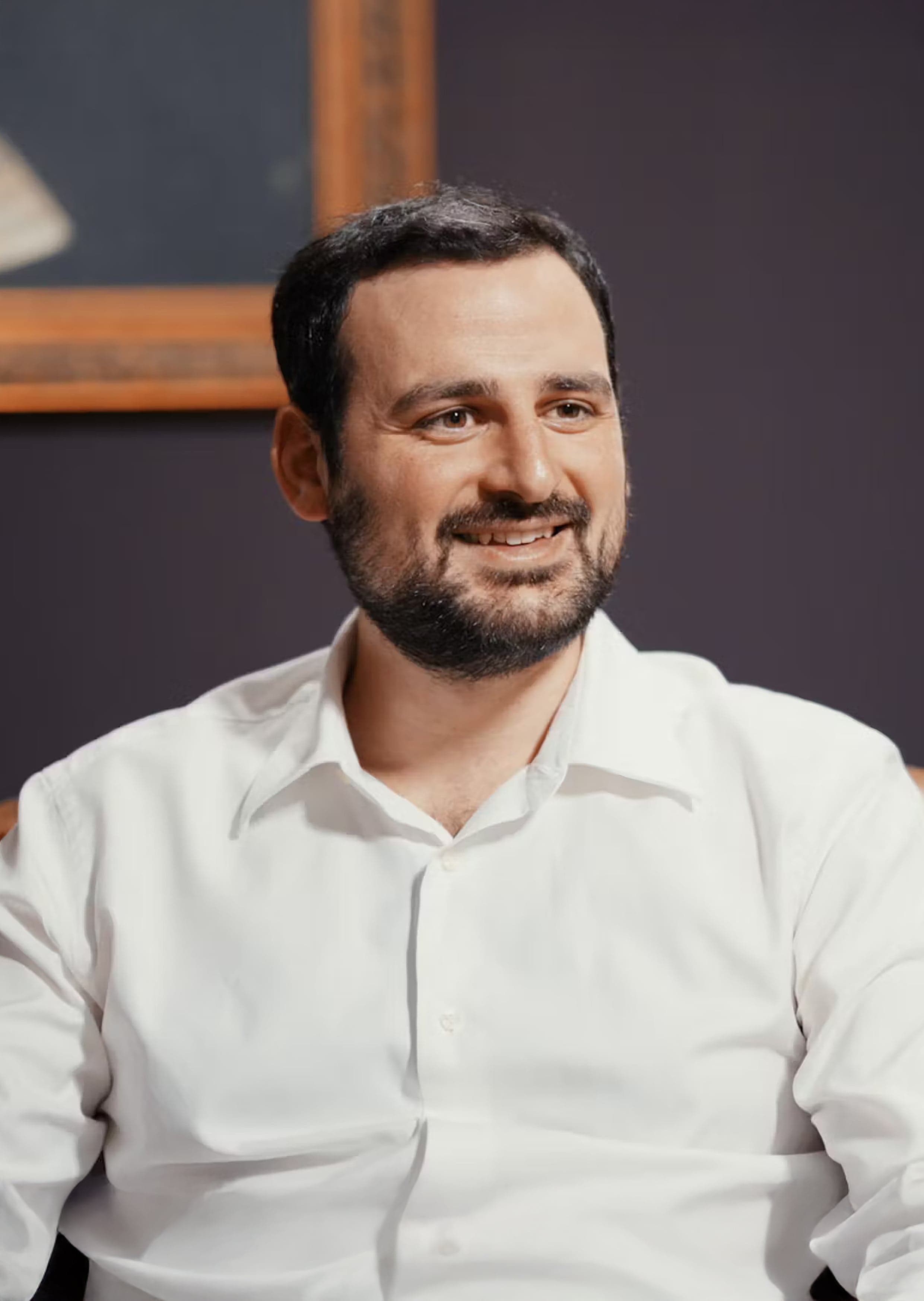
is a clinical psychologist and founder of Zensitively. He specialises in neurodiversity – particularly ADHD, autism, and high sensitivity – and developed this test based on validated psychological instruments. As a neurodivergent person himself, he combines clinical expertise with an inside-out perspective.
Frequently Asked Questions
The test typically takes 4 to 6 minutes. It consists of several short questions that you can answer intuitively — there are no right or wrong answers.
Immediately after completion, you receive your personal neuroprofile with a detailed analysis across various dimensions of neurodiversity.
Yes, the test is completely free. You only need an email address to receive your results — this is solely for the secure delivery of your personal neuroprofile.
There are no hidden costs and no obligation. Optional additional offers such as the Neurocompass or the e-book will be presented to you after the analysis, but they are not required to use the test.
No, this test does not replace a professional diagnosis. A clinical diagnosis can only be made by qualified medical or psychotherapeutic professionals after thorough examination.
What the test offers is a scientifically oriented self-assessment. It reveals tendencies and patterns that can help you better understand your own nervous system — and serves many people as a valuable starting point for further self-reflection or a conversation with professionals.
Yes, your data is treated completely confidentially and protected under the European General Data Protection Regulation (GDPR). Your answers and results are stored encrypted and never sold or shared with third parties.
Many patterns associated with ADHD, autism, or high sensitivity overlap significantly. An isolated test for just one dimension misses this bigger picture and can lead to more confusion than clarity.
Our test simultaneously captures multiple dimensions of neurodiversity — including factors like RSD (Rejection Sensitive Dysphoria) and alexithymia, which have a major impact on daily experience but are often not considered in conventional tests.
This way you get a holistic picture of your nervous system, rather than just a snapshot. This broader perspective helps you understand yourself better — regardless of whether a single diagnosis applies or not.
The test is based on the analysis of over 140,000 data sets and is continuously being developed. It follows recognized scientific principles and takes into account modern diagnostic insights that go beyond outdated classification systems.
Unlike many conventional tests, our approach follows the neurodiversity paradigm: the scientific recognition that neurological diversity is natural and that different nervous systems bring different strengths and challenges. The test was deliberately designed to provide reliable results for women and for people who mask heavily.
The neurodiversity test measures your self-perception across various dimensions scientifically associated with neurodiversity — including sensory sensitivity, attention regulation, social perception, emotional intensity, and other factors.
Unlike conventional tests that only look in one direction, our test simultaneously captures patterns from the autism spectrum, ADHD, high sensitivity, and related areas such as alexithymia and RSD. This gives you a comprehensive picture of your neurological profile.
After completing the test, you receive your personal neuroprofile — a detailed analysis showing how strongly various neurodivergent dimensions are expressed in you. The results are visually presented and clearly explained.
Your neuroprofile shows you tendencies and patterns — not a diagnosis, but an invitation to better understand your own nervous system. Many people report that this categorization helps them finally understand years-long patterns.