6 min read · 17. August 2025
Understanding High Sensitivity: When the World Becomes Too Intense

Nazim Venutti, MSc PsychClinical psychologist and composer

6 min read · 17. August 2025
High sensitivity is a phenomenon that affects about 15 percent of all people—and yet it is often misunderstood or overlooked. Unlike ADHD or autism, high sensitivity is not considered a disorder and is not captured by diagnostic manuals. The criteria are also not deficit-oriented. Nevertheless, highly sensitive people often experience considerable distress.
High sensitivity is best imagined as the pure form of a sensitive nervous system, so to speak as a kind of overarching category of ADHD and autism. Almost all autistic people or people with ADHD recognize themselves in high sensitivity. In my clinical career, almost all people with ADHD or autism were also highly sensitive—I would estimate that in the last ten years perhaps five percent did not meet the criteria.
The shared element is a chronically overloaded nervous system. The foundation in all three—ADHD, autism, and high sensitivity—is the same: a sensitive nervous system that is chronically overloaded and overwhelmed.
The biggest difference between highly sensitive and less sensitive people is the way they react to the environment and to their inner impressions. You can compare it to a gastrointestinal tract: Imagine that more sensitive people have a gastrointestinal tract that extracts more from what we eat.
If they eat lots of healthy things, they get more nutrients. If they eat rather unhealthy things, they also extract more harmful substances and react more strongly to them—perhaps they get a rash or food poisoning more easily than less sensitive people.
This analogy helps to understand that the things that come crashing down on highly sensitive people have greater significance and a greater impact. Quality instead of quantity becomes the central guiding principle of life.
Highly sensitive people often experience that they are overwhelmed by an intense emotional world. They don’t know exactly what they feel and why, and they feel cut off, different, and not belonging. The flight instinct is mostly directed inward—you get very lost in emotional worlds. The emotional intensity is often even stronger than in people who identify more with autism.
When highly sensitive people watch a movie together with others and talk about it afterward, they experience a special form of alienation. If one person experienced the film as earth-shattering and life-changing, and for the other person it was only “quite good,” this discrepancy is far more alienating than a normal difference of opinion.
Connection and belonging arise from having the experience of experiencing things similarly. When highly sensitive people experience something much more intensely and that intensity is not mirrored at the same level, it can lead to a feeling of strangeness.
The modern world is not made for people who experience emotions particularly intensely. The world bombards us with emotions. Emotions are no longer our private matter, but part of an entire industry. Marketing agencies spend billions to manipulate how our emotions play out, because emotions strongly influence our actions.
Highly sensitive people therefore often try to build an alternative life that is more detached from this exploitation of feelings. They are often not big fans of technology or of having many acquaintances. It is more about having a few relationships, but deep ones.
Highly sensitive people take longer to warm up and to trust. The emotional reservoir is large, and with it the danger that it will explode. They want contact with living beings that mirror the intensity of life so that they have a sense of belonging.
Highly sensitive people draw more from their environment and process it more strongly, whether it is good or bad. As a result, they react more strongly when they are especially supported and gain special access to helpful resources. But they also react more negatively when the environment is particularly toxic.
That means: No one benefits as much from a healthy life and healthy lifestyle as a highly sensitive person. The upward potential is very large. At the same time, no one is punished more harshly for having not-so-good habits.
Highly sensitive people process what they experience more deeply, link it more strongly with emotions, and experience it as more meaningful. This can lead to a richer inner life and to the ability to perceive nuances that others miss.
High sensitivity is not a weakness or a character flaw. It is a neurobiological fact that affects about 15–20% of the population.
The opposite is the case. Highly sensitive people need more protection and more careful design of their environment, not less.
The physiological differences in the nervous system of highly sensitive people are scientifically documented.
Because highly sensitive people extract more from their environment, it is especially important to pay attention to the quality of the environment:
It is important to understand at which moment which emotion is present. A journal about feelings can help a lot. The emotions I recommend observing: sadness, anger, fear, joy, love, shame, and guilt.
The goal is not to have only positive emotions, but to know what you feel.
For highly sensitive people, a systematic recovery program is especially important:
In the morning, find three things you are truly grateful for—and actually feel the sense of gratitude. This helps you perceive the basic positivity of life again, which often becomes invisible through habituation.
Highly sensitive people are often not big fans of superficial social contacts or technical distractions. This is not antisocial, but a natural protection of the sensitive nervous system. They tend to look for:
Even if high sensitivity sometimes feels like a curse, it holds a great gift: the ability for deep perception and for intense experience. Highly sensitive people can:
The challenge is not to "overcome" high sensitivity, but to learn how to live a fulfilling life with it. It is about recognizing your own needs, standing by them, and shaping a life that fits this special nervous system.
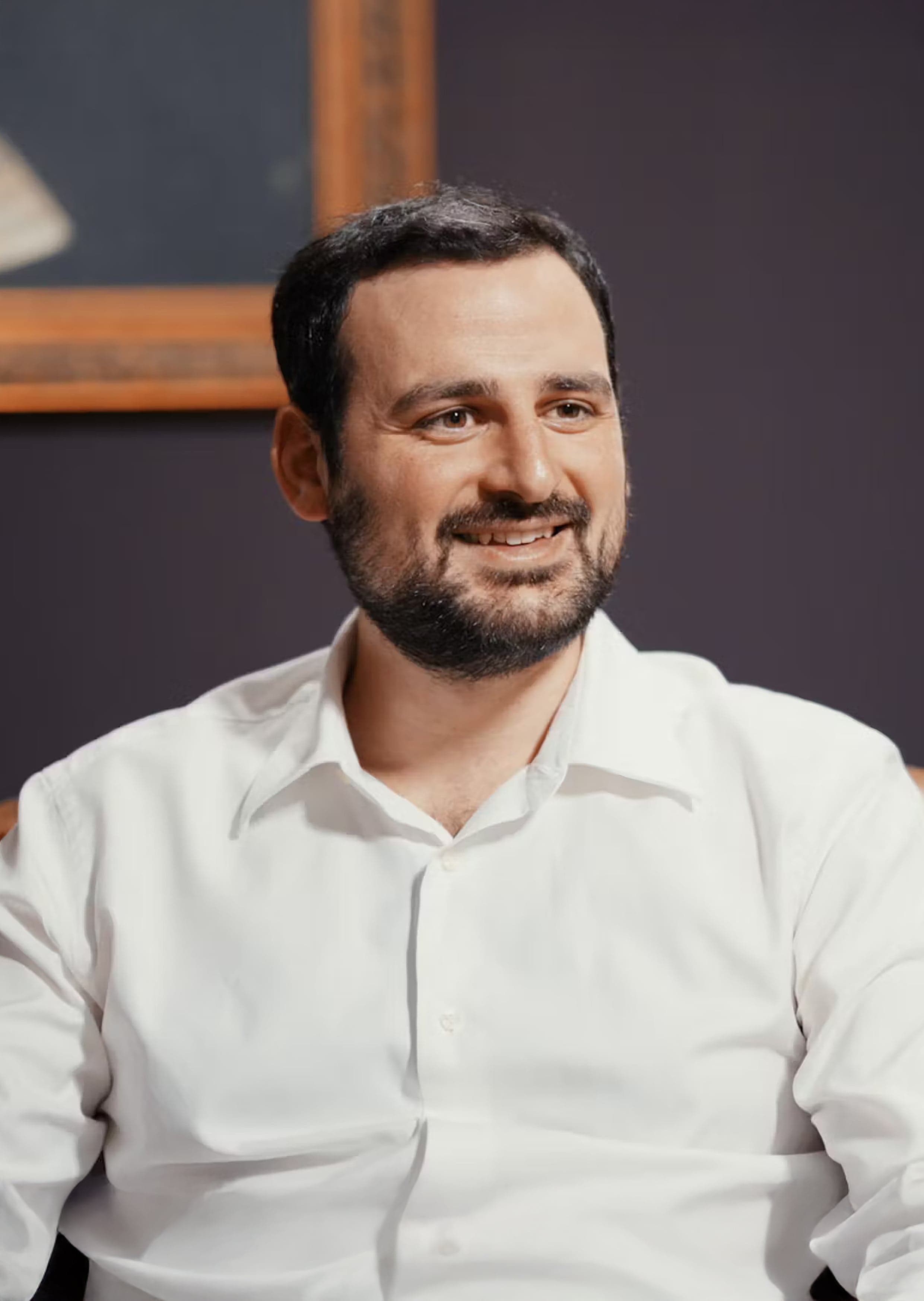
is a clinical psychologist and composer from Hamburg. He is neurodivergent himself and combines a professional perspective with an inside-out view. He is the author of the book Mastering Neurodiversity and the developer of the neurodiversity self-test.
Use the free Neurodiversity self-test for adults to better understand your own nervous system.