5 min read · 15. August 2025
ADHD in Adults: More Than Just Inattention

Nazim Venutti, MSc PsychClinical psychologist and composer

5 min read · 15. August 2025
Many people think of ADHD as hyperactive children who can’t sit still. But ADHD in adults often looks quite different. It’s a misconception to believe that people with ADHD are fantastic at doing many things at once. Most people with ADHD describe their ideal state—the one in which they feel most comfortable and function best—as one in which they are “locked in” — meaning truly highly focused on one thing that captivates them.
The well-known psychiatrist Gabor Maté describes ADHD as a kind of “tuning out,” a checking out in response to overwhelm. That is, in fact, what we observe: people check out and lose contact with their inner self. The symptoms that then arise—distractibility, impulsivity, forgetfulness, the erratic thinking—are not the predisposition itself, but the escape from what is happening inside us: overwhelm.
Modern life overloads the ADHD nervous system by demanding and activating it from everywhere at once, without really being able to convey one enduring thing that is important, exciting, and new. The system becomes so overloaded that the signals form a traffic jam.
You can best imagine the ADHD nervous system in a healthy state if you picture yourself out hunting. For several days, you’re on the move with the greatest concentration and the highest focus. You have a clear goal, everything else is irrelevant, and the whole process is invigorating, vitalizing, and captivating. The nervous system is geared toward nature repeatedly sending certain signals that say: “This and only this is what needs to be done; the rest doesn’t matter. Give it everything.”
Our modern world, however, says pretty much the opposite: “Everything is a bit important, but could also be a bit more important. I won’t tell you what’s important, and I won’t reward you immediately when you get something done.” Housework is a bit important, the tax return, meeting friends, calling your mother back, driving to work, but also working out. Everything is a bit important.
For the ADHD nervous system, that is an absolute catastrophe.
Most people with ADHD live a life that is very fast-paced. This inner pace is usually associated with a lot of stress. One of the reasons people with ADHD have a high pace in life is the attempt to be able to flee from what is happening inside them—a certain flight instinct, along the lines of “as long as I’m away from the inside.”
The more we increase our inner pace, the more invisible the whole thing becomes. It’s a bit like looking out the window while driving fast in a car: when we drive slowly, we can still see everything; when we get very fast, at some point it starts to blur.
In a world that doesn’t clearly communicate what is important, people with ADHD have particular difficulties. They need clear priorities and unambiguous signals about what must be done now. Without this clarity, a state of chronic overwhelm arises.
While people with ADHD are often described as inattentive, they can concentrate for hours on things that captivate them. This hyperfocus is a central aspect that gives us a clue as to how the nervous system is actually supposed to function.
The most common misdiagnosis with ADHD is depression. The difference is that for people with ADHD, boredom and the feeling of not being captivated lead to symptoms that are on par with those of a genuine clinical depression. Almost all people with ADHD who have depressive moods know that something can happen that pulls them out of the depressive swamp and suddenly they are fully captivated.
In neurodivergent people, we observe that dopamine regulation doesn’t work well. Dopamine is often referred to as the happiness hormone, but it is more accurately understood as the motivation hormone. It’s what motivates us, makes us want things, and binds us to life.
Our lives are often geared toward seeking dopamine spikes—through social media, unhealthy food, or other quick rewards. These dopamine spikes reward our nervous system suddenly and intensely, without any significant achievement behind them. The body’s reaction to this is confusion, and it dials down sensitivity.
Neurodivergent people—whether ADHD, autistic or highly sensitive —draw more from their environment and process it more strongly, whether it is good or bad. The principle is: Quality instead of quantity. That means:
The most important thing is to understand that ADHD is not something you can treat with therapy. It is a predisposition that must be managed continuously. The three pillars of recovery are central:
These three areas should make up a significant part of our day so that our nervous system can move back toward its baseline.
When being different feels like a curse, that is usually because we are dissatisfied with our lives. The greatest fulfillment for all living beings lies in being able to be themselves—unfolding their own talents, realizing their own potential.
Our suffering, which makes it impossible for us to be normal and play along, is actually the greatest gift. Because nothing motivates people as much as not wanting to suffer anymore. While neurotypical people have to motivate themselves to strive for authenticity and self-expression at all, for us this motivation is basically built in.
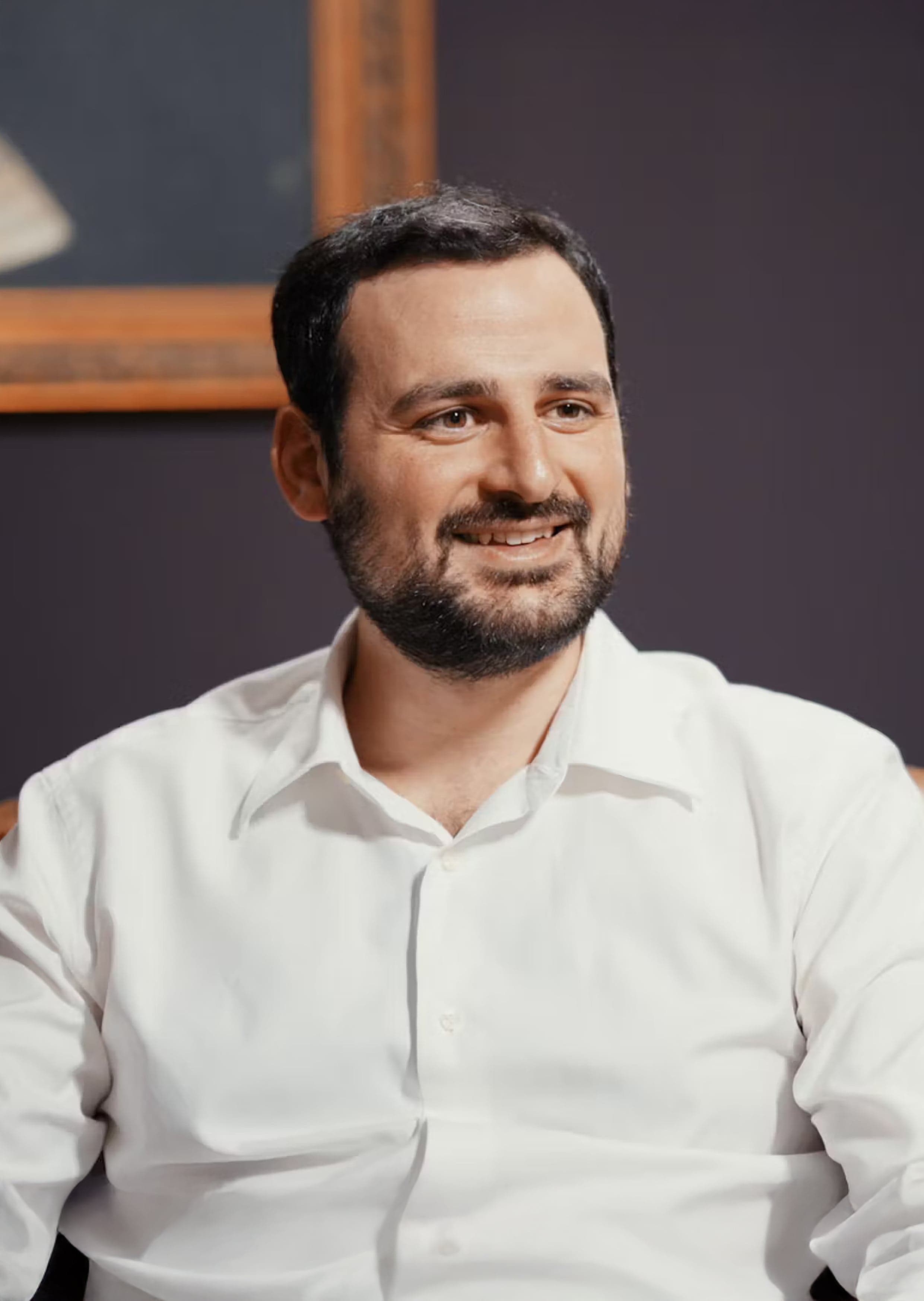
is a clinical psychologist and composer from Hamburg. He is neurodivergent himself and combines a professional perspective with an inside-out view. He is the author of the book Mastering Neurodiversity and the developer of the neurodiversity self-test.
Use the free Neurodiversity self-test for adults to better understand your own nervous system.