The manual for your nervous system

Now available in English! Translated and dubbed into English from the original German. Both audio tracks (and subtitles) are available for every lesson. Try it here:

Learn to live in tune with your nervous system — step by step, guided by a clinical psychologist who is neurodivergent himself.

Psychologically grounded
Lifetime access
Free updates

We live in a world that was not made for us

We have learned to think that something is wrong with us when life does not run smoothly. When we struggle. Or when we watch others overtake us. Or when our inner world seems more intense and wilder than other people's.

But at the same time you also know that you are not defective. That it is not a disorder or an illness that makes you the way you are. You are simply different. But how? And can a person even become happy like this? Find love? Be healthy? Be fulfilled at work?

The journey to ourselves

The world out there does not invite us to get to know ourselves. I know that from experience. I too grew up with expectations from outside, with an idea of what is normal and what is not. I was identified as highly gifted in childhood, but the neurodivergences were overlooked — or rather waved away. As weaknesses of character, flaws, faults. Only because I felt and thought differently.

Things that were self-evident and easy for other children turned out to be a great challenge for me: dealing with other children at school, the enormous depth of my own feelings and emotions, or simply the impulsiveness that positively pushes you toward the wrong decisions.

The hardest part of a situation like that is the aloneness: the feeling that nobody really understands you — not your own parents, not your friends, your teachers, your colleagues, not even yourself. Being overwhelmed was read as laziness, and the needs of your own nervous system as self-importance. The attempts to be normal failed, even though they kept raising hope for a few weeks at a time.

What began back then at school continued seamlessly into adult life — only the consequences grew harsher. After an eight-hour working day that colleagues found "completely normal", I would lie exhausted on the couch in an existential crisis, wondering how other people could still do sport or see friends afterwards. Relationships broke down over difficulties in communicating, because I could not express what I really felt or why I behaved differently than expected. My career stalled, because I could not understand the political game in offices and teams, let alone play it. My body rebelled more and more: panic attacks, existential crises, a nervous system under permanent stress. The less I was able to achieve, the greater the stress became. I knew: it could not go on like this.

So, as happens to many neurodivergent people, at some point my fate threatened to slip out of my control. But I did not want to be someone people later say this about: "He had such great potential, and look what became of him!"

That sentence echoed in me, because I saw what it really means to fail as a neurodivergent person in a neurotypical world. Not just missed chances and unfulfilled dreams — but years of a life lost in a fight against yourself. Relationships that can never unfold their depth, because you don't know how to let the mask fall. A body of health that crumbles piece by piece under the weight of constant over-functioning. And worst of all: the creeping forgetting of who you actually are. After years of masking and adapting, what often remains is an empty shell that functions but does not live. I could see it when I looked into other people's eyes: many lost their glow over time — that glow children still have so strongly. I wanted to keep the glow in my eyes.

The moment it clicked

It all began with a vague feeling: something in me knew that I was merely different, not wrong. I no longer wanted to spend my life chasing a normality that was neither desirable nor realistic for me. So I studied psychology, philosophy and musicology.

Psychotherapy was very sobering. What we learned there was not the healthy variety of human experience and how to work with it, but what is ill and what is healthy. We were trained to look for the problem only ever in the person themselves or in their immediate family, rather than in the world around them.

I recognized that the outside world is arranged so that the people who are wired differently have the hardest time of it — and understood that what is needed is a journey to ourselves, rather than diagnoses, labels and therapies, if we are to be genuinely fulfilled. So I set out. Once for myself — but also for you. Because from the very beginning my goal was to help others as well. Above all those who had it far harder than I did.

That journey was very long and endlessly arduous. Because almost nothing out there is genuinely built around the needs of neurodivergent people. I tried out every technique I could find and studied every book I could get my hands on. The philosophy degree may have helped me even more than the psychology one; my career as a clinical psychologist moved into the background. I became a body psychotherapist and increasingly began to look at the person as a whole. Those years mattered — years in which, through meditation, dance and movement, I studied different ways of making contact with one's own nervous system.

Over time it became ever clearer to me that we humans are all different. Which is why we cannot learn from a book how to live and what to do. A diagnosis does not really show us who we are either; it only categorizes our symptoms. We have to write our own manual and understand how to operate this machine we are sitting in, if we are to be genuinely fulfilled.

At some point, after years of trying, researching and searching, there was one great moment where it clicked: I understood who I am, what the unchangeable core is, and everything my brain had been doing beforehand to reject, change or "optimize" that core. An enormous weight fell from my shoulders and a peace spread through me. I will never forget the feeling of the pressure falling away — the pressure of having to be someone.

From that moment on I could use all of my energy to build bridges to the outside world, instead of being flattened by it. I could tell when I was able to push and when I needed breaks, without being ashamed of it. I could positively see why and when we misunderstand each other, and what our potentials and limits are. This radical self-acceptance is a peaceful stillness and emptiness that I can draw energy from at any time and come to rest in. I came to call this way of moving through life zensitively, because it joins sensitivity with the peaceful, quiet emptiness of Zen (a Buddhist school of meditation).

The last problem

I researched the scientific foundations of this experience, worked out which principles underlie my path — and founded Zensitively as a psychological institute with the goal of helping other people. It spread like wildfire. Before long it was not only people directly affected who were interested, but psychologists and coaches too: at last there was an approach that works. I call it the Eigenraum Approach, because it works with the person's own inner space — their lived experience — rather than with perspectives from outside. It is not a therapeutic method, and there is no diagnosis, dogma or personal worldview of mine behind it. It is meant to help people find an unmediated, direct relationship to themselves and to shape their lives out of that contact.

After all those years there was still one challenge left to master. The approach helped, that was clear, but it was only available to a small group of people: those I had time for and who could afford to work with me. Walking that path cost many thousands of euros — a sum that a change like this is more than worth, but that not everyone can afford. And my time was limited besides. So I developed an online course that walks you through the Eigenraum Approach step by step, at your own pace, and with which you write your own manual. So that everyone really does get the chance to find, at last, the fulfillment they deserve.

Psychologically grounded
Lifetime access
Free updates

What you get

The complete video course
  • 12 lessons, over 190 minutes in total
  • Structured modules for every area of life
  • Theory and practice perfectly combined
  • Lifetime access, all updates included
Expert content
  • Scientifically oriented frameworks
  • Methods from clinical psychology
  • Personal insights and experience
  • Concrete tools for everyday life
A journey at your own pace
  • No fixed dates and no time pressure
  • Fits into a stressful everyday life
  • Learn whenever and wherever you want
The Morning Ritual Lab
  • Exclusive bonus content on routine
  • Suitable for beginners and experts alike
  • Scientifically grounded exercises
Security & guarantee
  • Psychologically grounded
  • No hidden costs and no subscriptions
  • Secure payment via Stripe

After my late ADHD diagnosis, this course was an eye-opener. The energy management concept was especially valuable—I now understand why I’m so drained after certain days. The changes are happening slowly, but steadily. I’m grateful for this new perspective on my nervous system.

Anna K.
Anna K.
IT project manager, 42

Without an official diagnosis, I wasn’t sure whether the course would be right for me. But the very first lesson moved me deeply—at last I felt understood. The morning routine from Module 5 transformed how I start my day. It’s freeing to know that the way I am is completely okay.

Thilo B.
Thilo B.
Graphic designer, 35

Course modules

Topics
  • What makes neurodiversity what it is? We question the traditional view of psychological diagnoses and explore the revolutionary concept of neurodiversity. You’ll learn to understand why difference is not the same as illness.
  • What makes me different? Here we look at different forms of neurodivergence and their overlaps. You’ll learn why ADHD, autism, and high sensitivity aren’t clear-cut categories—and what’s really behind these terms.
Learning goals
  1. 1.You understand neurodiversity as natural variation, not as a disorder.
  2. 2.You recognize the different forms of neurodivergence and their overlaps.
  3. 3.You develop a deeper understanding of your own nervous system beyond diagnoses.

As a bonus, you get access to

The Morning Ritual Lab

The 8 most effective scientifically oriented exercises for your nervous system — not as a rigid corset, but to try out, play with and explore. Daily exercises, 5 levels per exercise (in increasing degrees of difficulty).

Breathwork

Cold exposure

Morning meditation

Defocusing

Morning check-in

Journaling

Prepare for tomorrow

Evening check-in

Your course instructor

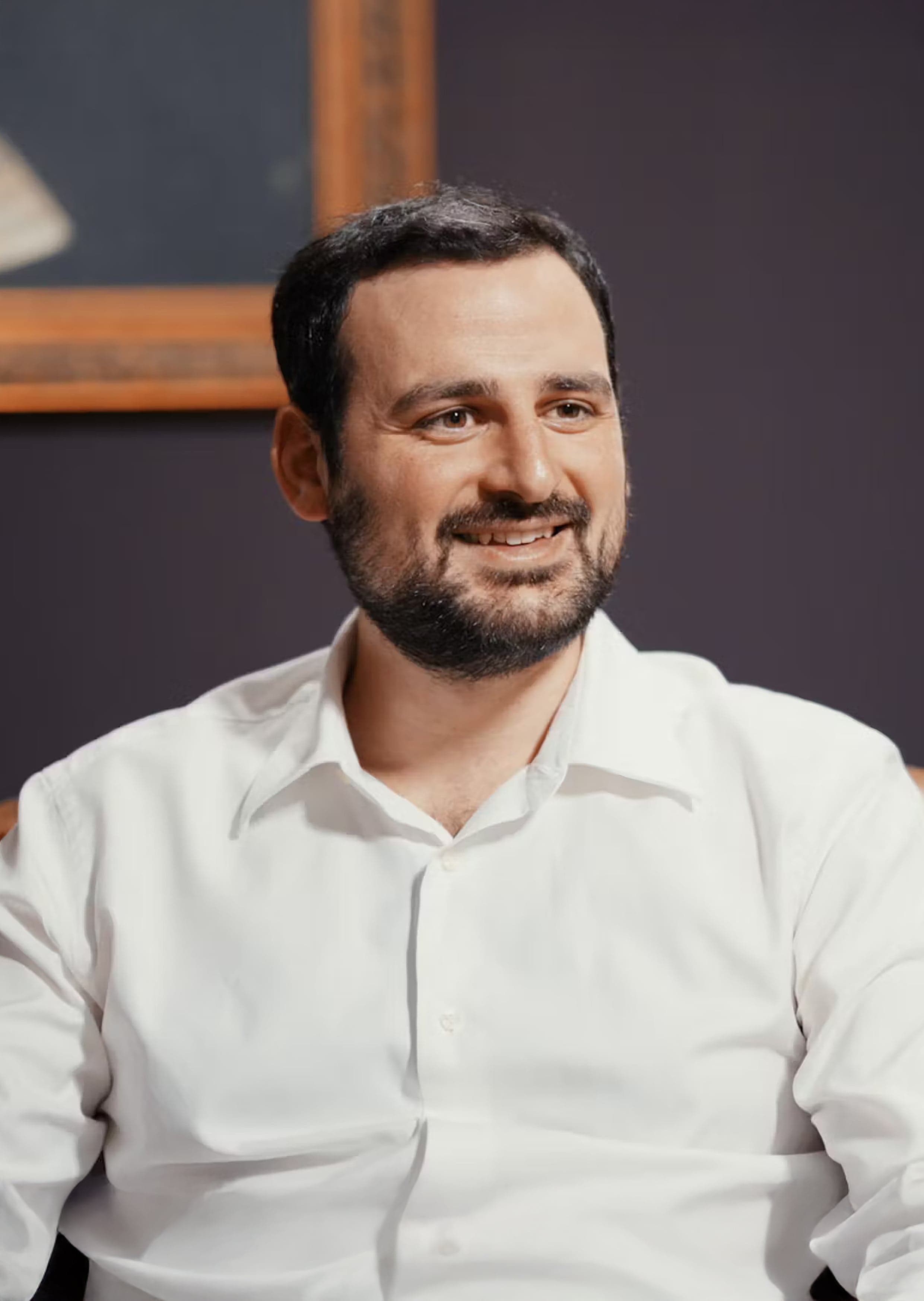
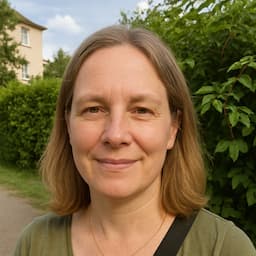
Portrait of Nazim Venutti

I am Nazim Venutti — clinical psychologist, philosopher and composer, and neurodivergent myself.

Since 2012 I have been helping people, particularly those with ADHD, autism and high sensitivity. I founded Zensitively to advance neurodiversity.

Since 2017 I have been training coaches and therapists in a method I developed specifically for neurodivergent people, one that puts our lived experience at its center: the Eigenraum Approach.

It combines scientifically oriented frameworks and tools with an introspective perspective grounded in your own lived experience — so that step by step you develop your own way of working with your nervous system, accompanied rather than left alone.

Memberships

Association for Neurodiversity
ADHD Germany
AG ADHD
Association of German Psychologists

Mr. Venutti’s humanity and remarkable expertise impress me anew with every session and ignite a thirst for truth in me that continually inspires and strengthens me.

Barbara W.
Barbara W.
5/5 Google Reviews

It’s hard to put into words how much working with Mr. Venutti changed my life—and continues to change it. Our work together for more than four years not only supported me in processing a major blow of fate, but also helped me develop personally to a new level.

Thomas B.
Thomas B.
5/5 Google Reviews

What makes this course so valuable

One of the most frequent things clients tell me is that they need time to process after a session. So a few years ago I moved from weekly sessions to every two weeks, or even every four. That is exactly when I began to seriously imagine a course. Because in a video course you can do everything at your own pace.

I was asked many years ago whether I wanted to record a course. But I never wanted to: "How are you supposed to bring about real change through video?", I said. And yet I also knew the research, which actually shows how well video can work.

Why we can't put the obvious into practice

What became clearer to me over time is that this method in particular is well suited to a video course. Conventional tips you can look up in books and on the internet; family history you can work through in therapy — but a genuinely fundamental shift in your own perspective? For that you have to be exposed to certain themes again and again, not just once in a session.

Many of these videos you will watch several times — again and again, in fact. That is why it mattered so much to me to offer lifetime access rather than limit it. For as long as Zensitively exists, you can reach this course. Because what I pass on here is more than the currently best tools and a modern understanding of neurodiversity. It is a perspective, a mindset — a way of looking at yourself, at the outside world and at life, that opens a great many doors.

Here is an example: many people complain about stress. When we then look at their everyday life, we see that the day is packed. Of course the solution is to pack less into the day. But you are also clever enough to know that yourself. So why don't you arrive at it? That question occupied me for a very long time.

The answer is not that you can't arrive at it. You know as well as I do how it ought to go. Because it is your body, and that knowledge comes bundled with the DNA — as it does for every other animal. The problem is rather that we are systematically alienated from our bodies and from what is inside us. So we lose access to ourselves — and instead we compare ourselves with others, demand performance of ourselves, try to meet expectations, to be enough, to be healthy, to be normal, to be wonderful, to be attractive.

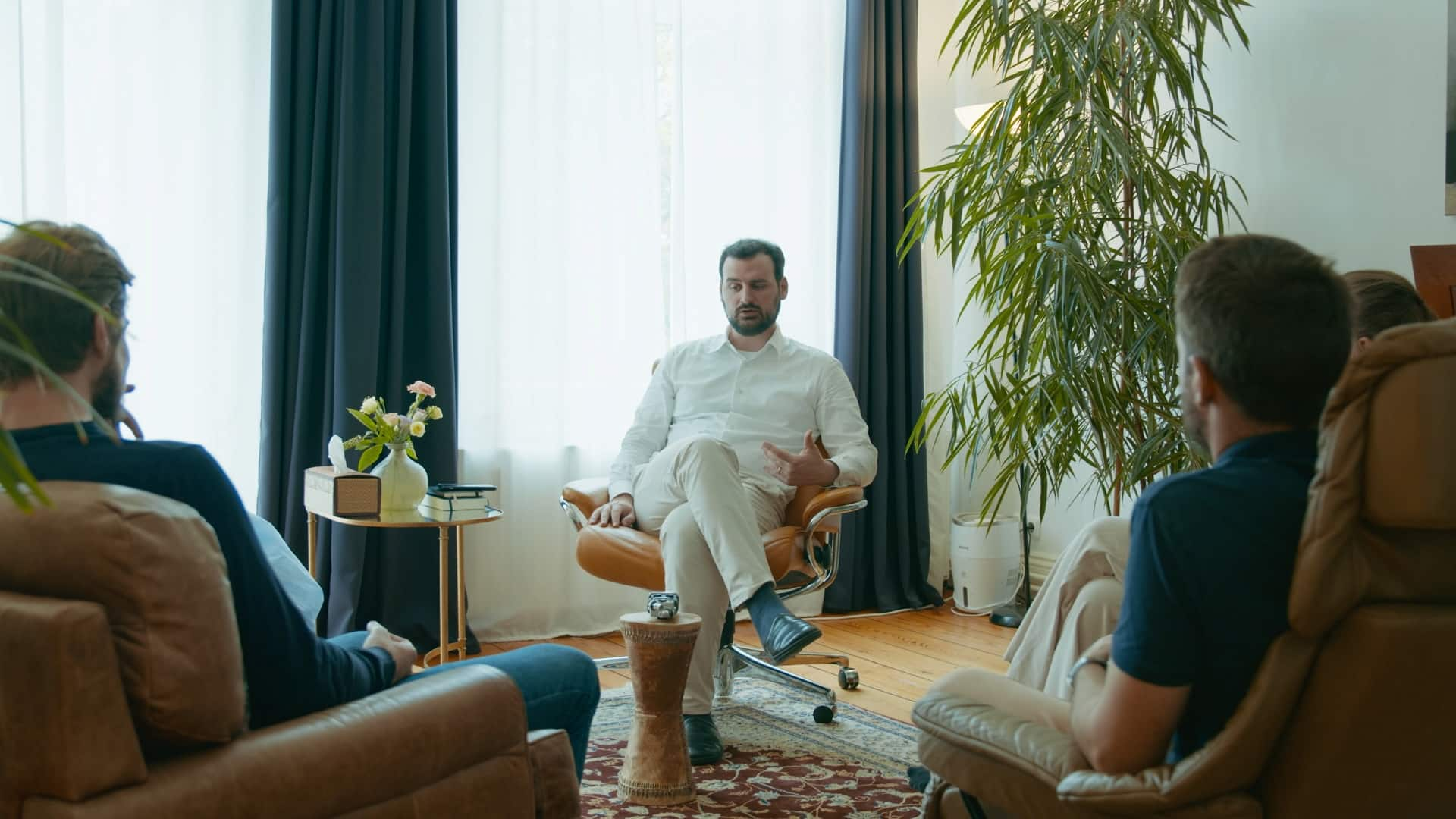
A moment from the course — warm, approachable, real

The Eigenraum Approach

So I decided to take a different route. To develop an approach that does not say what to do, but goes at the problem by its root: restoring contact with what is inside, and tapping the source that knows exactly what is good for us and what is too much. Of course I give you tools to take along — but they also serve to make you notice at all how far our modern way of living actually is from what our body is asking for.

This approach in particular works excellently as a video course. Because you can watch it again and again. Finding your way back, again and again, to the idea of unmediated contact with yourself — to the feeling of being okay as you are. Being able to relax, to be in acceptance and at peace. And to go out into the world from overflowing inspiration and help shape it.

Having access to all of that without paying for years of therapy, coaching and counseling, without depending on contradictory or oversimplified tips from the internet, and without piecing it all together yourself out of theoretical books and personal accounts — that is a great gift and enormously valuable.

With two neurodivergent children and being an HSP myself, I was at my limit. The course helped me understand and respect our different needs. Our family works more harmoniously now because we all have more understanding for each other. This investment was worth it.

Julia R.
Julia R.
Mother & office clerk, 45

Despite being successful at work, I felt like an imposter. Receiving an autism diagnosis at 35 explained a lot. The video about work was an eye-opener—I now use my autistic strengths intentionally. Reducing masking was scary, but it’s paying off. I’m more authentic and more successful.

Mona W.
Mona W.
Management consultant, 37

Secure your place now

Introductory price · founding cohort
197,00 €
Or in 3 installments of €66 each
All updates included
Secure payment

As a highly sensitive teacher, everyday school life was often overwhelming. The course gave me practical strategies for handling my energy more mindfully. The small break rituals made a big difference. I now feel more competent in how I relate to my sensitivity.

Justyna M.
Justyna M.
Teacher, 28

The scientifically oriented explanations convinced me. As an autistic person with ADHD, I finally understood why social situations are so exhausting for me. The Eigenraum Approach gives me tools that really work. My relationships have noticeably improved.

Dr. Marcus H.
Dr. Marcus H.
Software developer, 39

Frequently asked questions

Here you will find answers to the most important questions about the course

Secure your place now

Introductory price · founding cohort
197,00 €
Or in 3 installments of €66 each
All updates included
Secure payment

A personal closing word

I don't know whether a website can really convey how much this course means to me. In this world you often have to market yourself — to point out why what you do is so good.

But this course is not primarily about what makes it special or valuable. It is about nothing less than our individuality. Just as it matters to me to be an individual myself — a free person — it matters to me that you are one too. Even if we don't know each other (yet).

I can't stand waste. Even as a child I disliked it when food was thrown away or the light was left on. A person whose individuality was never allowed to see daylight — all those particularities, all that potential — that is a particularly great waste.

That is why I recorded this course — and by recorded I mean: I taught myself camera work and lighting, designed this website myself, and programmed the course platform. I composed the music in the intro video too. Because it means so much to me that all of it is authentic. And because the world urgently needs people who are themselves — who stop chasing dreams, understand how they work, and find a path to fulfillment. Because only someone who is fulfilled has a positive effect on themselves, on the people around them — and on the whole world.

Warmly,

M.Sc.Psych. Nazim Venutti

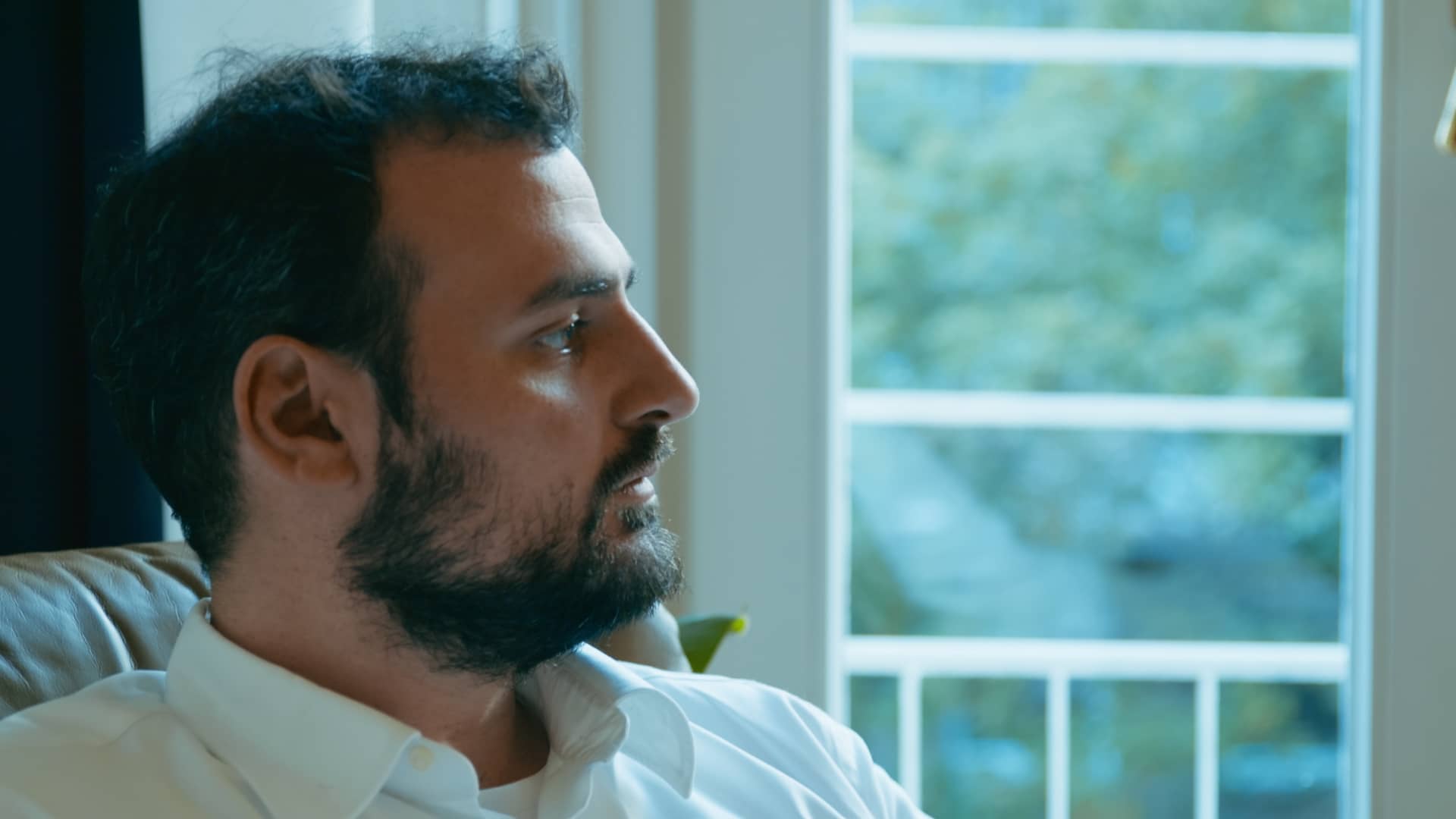
A moment from the course — warm, approachable, real