8 min read · 19. September 2026
What does neurodivergent mean?

Nazim Venutti, MSc PsychClinical psychologist and composer

8 min read · 19. September 2026
You could be forgiven for thinking that neurodivergence is on everyone's lips. Celebrities going public about ADHD or autism, or content creators and influencers posting non-stop about focus, deadlines, planning and AuDHD.
Yet new research by our psychological institute, which specialises in neurodivergence, shows that almost 98% of the content on neurodivergence we found on social media is flawed or simply wrong.
This is not about the lived experience of the people concerned. It is about questions of definition, such as: What does neurodivergent mean? What is neurodiversity? Is neurodivergence a disorder or an illness? Why should I look into it at all? Do I need a diagnosis for it?
One of the most common mistakes we see lies in the definition of neurodivergence itself. What we usually read is a variation of this: neurodivergence is a deviation from a certain normality, from the average, or from what is neurotypical.
The nervous system, in other words, works differently from most other people's, and that is what makes someone neurodivergent.
Sadly, that definition is very widespread, and it is not correct. Understanding neurodivergence rests on one term as its foundation: neuronormativity.
Neuronormativity is a structural, systemic pressure towards the idea that there is one right way of processing information. Processing information here means learning, thinking, feeling and experiencing.
Structural means that neuronormativity never has to be spelled out. It does not have to be announced anywhere, or even mentioned. It is part of the very structures we move in as people. Systemic means that it is part of a dynamic that keeps itself going.
Through its one-sidedness and its pressure, neuronormativity leads to discrimination against people whose way of processing information differs.
A few examples of neuronormativity:
So what does neurodivergence mean? Neurodivergence is the extent to which a person is affected by neuronormativity. The question is less whether someone is normal, and more how far their way of processing information differs from the systemic expectation of how information is to be processed.
In certain cultures, for instance, a lack of empathy can be part of neuronormativity, and people who respond with empathy are judged weak, affected or "toxically empathetic", and discriminated against.
Or cultures that place very high demands on unquestioning adherence to custom can discriminate against people who think for themselves rather than learning established rules by heart and following them.
As an idea, neurodivergence is closely tied not only to neuronormativity but also to neurodiversity. Because neurodivergence is what comes out when neurodiversity meets neuronormativity.
Neurodiversity describes the assumption that there is a natural variety of human experience which in itself is neither wrong nor right — it is simply a fact. The idea of neurodiversity holds that there is no right way to be human, and therefore no strategy of processing information — which makes up a large part of what being human is — that is right or wrong in itself.
Much as there are no wrong or right animals or plants, only a variety whose interaction makes up the richness of nature, neurodiversity holds that it is the variety of experiencing, thinking and feeling that makes up humanity.
Behind this lies the understanding that human thinking is not only limited and error-prone but also reductive: it leaves out certain data and prioritises others. Through variety, different aspects of one and the same reality are taken in and processed differently, and so find their way into the collective unconscious and conscious.
Which means: we come closer to a deeper understanding of the world by gathering as many different perspectives as possible and forming one coherent picture from them.
Neuronormativity works against this by demanding homogeneity — and so produces neurodivergence.
In an ideal world, lessons would begin with metacognition. We would first empower children to explore how their own nervous system works and to learn how to learn.
In the reality most people live in, and children above all, metacognition plays almost no part. What counts is the result produced, more than the route a child takes to get there. So we never find out how the brain works, only what it puts out at the end. In the worst case, that is exactly what is graded.
As a result, neither children nor parents nor teachers know how the child actually learns and which conditions help. Which raises the question: how do we recognise neurodivergence at all?
To tell whether a person is neurodivergent, we are unfortunately dependent on measuring various symptoms. These symptoms are not natural consequences of the nervous system; they are often the result of friction between the nervous system and the neuronormativity of the world outside.
They can include inner restlessness, listlessness, trouble concentrating and burnout, but also socially conspicuous behaviour, difficulty starting tasks or switching between them, communication "problems", or emotional reactions that are judged to be very strong.
Certain constructs known in psychotherapy as disorders are therefore increasingly counted as part of neurodivergence. These include autism spectrum disorder (ASD), ADHD and ADD (ADHD, predominantly inattentive type), Tourette syndrome, tic disorders, dyslexia, dyscalculia, dyspraxia and dysphasia.
Certain characteristics are often counted as neurodivergence as well, without being classified as clinical "disorders": giftedness, synaesthesia, high sensitivity (HSP), aphantasia.
Genetic and chromosomal differences can be part of neurodivergence too. These include trisomy 21 (Down syndrome), fragile X syndrome, Williams syndrome and Prader-Willi syndrome.
It is also important to understand what the modern perspective on neurodivergence shows us: neurodivergent experience deserves recognition beyond the places where neuronormativity meets predisposition. Many people with psychiatric diagnoses are affected by neurodivergence as well. These include traumatic brain injury (TBI), neurological conditions (acquired differences in the brain caused by strokes, brain tumours, multiple sclerosis, epilepsy), post-traumatic stress disorders (PTSD / cPTSD), borderline personality disorder (BPD), the schizophrenia spectrum, bipolar disorder and dissociative disorders.
There is no complete list of every characteristic that leads to neurodivergence. What decides is not a list drawn up by some official body, but the individual situation of the person, including their lived experience.
In themselves, these symptoms do not necessarily mean that the person concerned is neurodivergent. So it is always necessary to look at the symptoms together with the life story and the lived experience. Lived experience matters a great deal here: it opens up an inner world that would otherwise stay invisible, and it lets people give an account of their own experience in their own words, and so in their own framing. Unfortunately, lived experience still receives too little attention in both diagnostics and research.
How are the effort not to stand out and a person's own experience connected? To find out, we analysed all 156,578 completed tests in our data at the Zensitively institute: in German, English, Spanish, French, Portuguese, Turkish and Italian. The answers come from the period between 16 October 2024 and 19 September 2026.
People who often suppress their natural reactions reported being unclear about their own feelings more than twice as often.
| Statement on suppressing | Unclear about feelings | Share |
|---|---|---|
| Disagreed | 10,002 of 39,240 tests | 25.5% |
| Middle answer | 12,858 of 36,145 tests | 35.6% |
| Agreed | 45,100 of 81,193 tests | 55.5% |
We checked whether repeat participation skews the result. If we look at 137,920 first completions instead of all tests, the shares stay almost unchanged: 55.6% against 25.6%.
The pattern appears in all seven language versions. It therefore seems to hold across particular cultural expectations and social rules.
Suppressing your own reactions so as not to stand out
156,578 completed tests · shown here: 137,920 first completions
German · 114,865 first completions
English · 2,714 first completions
Spanish · 8,431 first completions
French · 5,468 first completions
Portuguese · 3,958 first completions
Turkish · 1,821 first completions
Italian · 663 first completions
Share reporting that they are unclear about their own feelings
The analysis shows a connection, not a cause. So it does not show whether the suppressing deepens the lack of clarity, whether both come out of other factors, or whether the lack of clarity encourages the suppressing. For your own experience the finding stays relevant: alongside the reactions that are visible, it is worth asking what a person is holding back, and how they see themselves while doing it.
Source: Zensitively analysis of 19 September 2026. The voluntary self-reports come from completed tests; the chart compares first completions. The sample is not representative and allows no diagnosis and no causal claim. View the aggregated figures
To find out whether you are neurodivergent, a well-founded self-test for neurodivergence can be a very good starting point. We recommend our free self-test, which you can take here.
Neurodivergence itself is not a medical, psychotherapeutic or psychiatric diagnosis. Although disorders or illnesses can underlie neurodivergence in some cases, being neurodivergent is not an illness or a disorder. It is the result of systematic discrimination that is often invisible and that ought to be met with reasonable adjustments.
We at Zensitively are a psychological institute that wants to make it possible for neurodivergent people to lead a fulfilling and authentic life. The Eigenraum Approach taught and practised at the institute lets people put their lived experience at the centre, shed the neuronormativity they have internalised, and take a creative part in shaping their own lives.
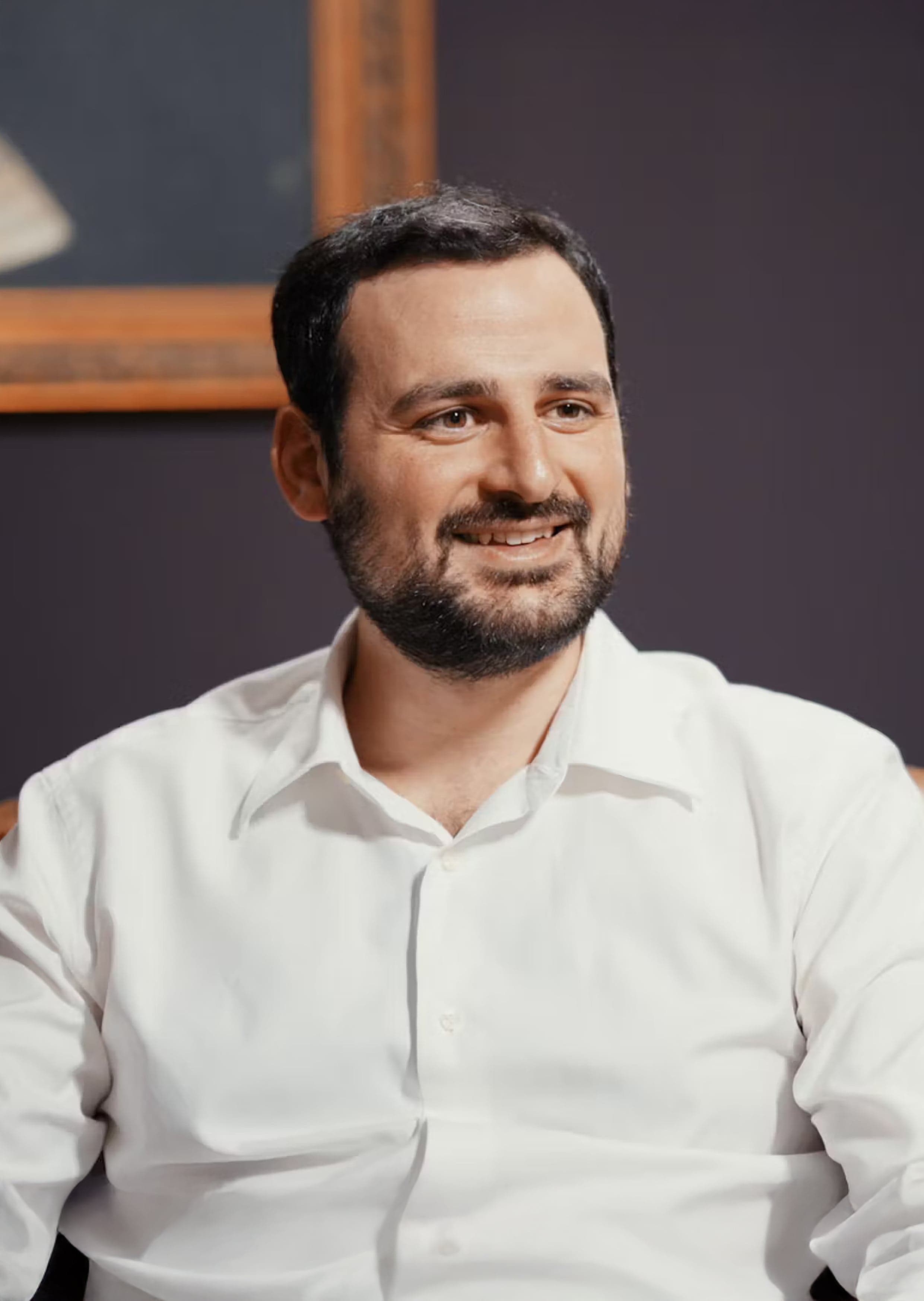
is a clinical psychologist and composer from Hamburg. He is neurodivergent himself and combines a professional perspective with a view from the inside. He is the author of the book “Mastering Neurodiversity” and the developer of the neurodiversity self-test.
Use the free Neurodiversity self-test for adults to better understand your own nervous system.